The Story
Why it exists.
The beginning
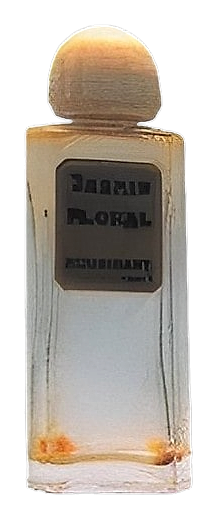
In 1918, Houbigant released Jasmin Floral, and the choice itself was the statement. Rather than build another layered composition, the house committed to a single flower, one note allowed to occupy the entire frame without accompaniment or competition. The result was a jasmine declaration, stripped of ornament, confident enough to stand on petal alone. What makes this release worth noting isn't the note itself, it's the discipline of refusing everything else. Where most fragrances of the period and after used jasmine as a chord member, blending it with rose, tuberose, ylang-ylang to create bouquets that read as idea rather than flower, Jasmin Floral commits to the opposite gesture.
What makes a single-note jasmine composition interesting isn't the note itself, it's the choice to refuse everything else. The challenge then becomes one of material. The composition lives or dies on the quality of the absolute used, and the jasmine at the center of Jasmin Floral carries the indolic depth and waxy lift that defines the flower's most uncompromising expression. This is jasmine rendered without apology, its contradictions intact: bright and heavy, narcotic and clean, delicate and dense. The opening gives way to a heart that grows denser, the indolic facets emerging in layers.
The evolution
Jasmin Floral opens the way jasmine opens in a garden at dusk, immediately, without introduction. The first minutes carry the brightest facets: a green, almost stem-like sharpness, the clean lift of fresh petals catching light. There's a soapy edge in the opening, a thread that sets the tone for what follows. The indolic heart asserts itself early and completely. This is the part that polarizes. The dense, almost animalic warmth of jasmine absolute comes forward, waxy and creamy, with a honeyed undertone that feels less like a flower and more like skin in warm air. For hours this is the dominant register, a sustained middle that doesn't shift so much as deepen, getting richer and more narcotic without ever crossing into cloying. The drydown is the quietest chapter. The intensity softens, the indolic edge rounds into something gentler, a powdery warmth that clings close to skin.
Cultural impact
Jasmin Floral sits within a tradition of soliflore compositions that treated single flowers as complete statements rather than raw materials for bouquets. The fragrance belongs to a lineage of early 20th-century French perfumery that valued the individual voice of each botanical, releasing each one as a finished thought rather than a component. As a 1918 Houbigant release, it occupies a specific place in the history of floral perfumery, one that rewards collectors and enthusiasts interested in the evolution of the soliflore form.