The Story
Why it exists.
The beginning
Federico García Lorca's poem "Poema del Cante Jondo" opens with the line "Arbolé, árbolito, árbol y green." Dry, green, and standing. Hiram Green took that image, a tree holding on through summer heat, its bark warming against the sun, and built a fragrance around it. Not a literal translation. A feeling. The kind of afternoon where the wind smells like dry earth and the air holds just enough warmth to stay outside past when you planned to come in.
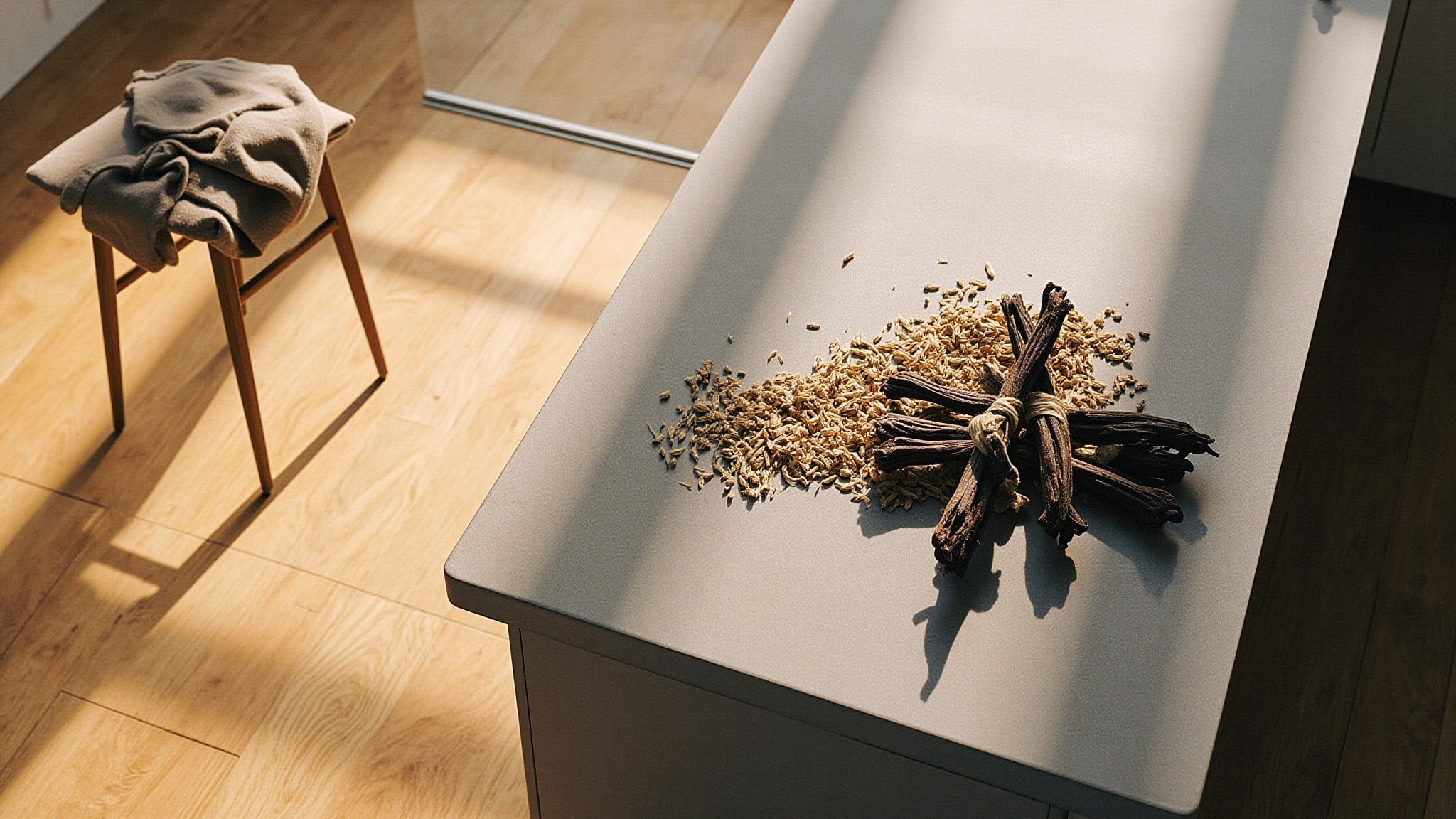
Patchouli leads Arbolé. Not the medicinal, borderline barnyard patchouli of 1970s counterculture, something cleaner, earthier, more green. On Indonesian soil, patchouli develops that mineral-dark signature; in the hands of a naturals-only perfumer, it arrives without synthetic shortcuts muddying the signal. Cedarwood and sandalwood form the heart: the cedar adds structure and a faint turpentine lift, while Mysore sandalwood brings its characteristic creamy, almost milky warmth. By the drydown, tonka bean and vanilla are doing what tonka and vanilla do best, softening everything into powdery amber without making the composition sweet. It's a trick earned by patience, not chemistry.
The evolution
Patchouli arrives first, earthy, green, immediate. No delay. That mineral-dark opening sits close to the skin from the first spray. Within twenty minutes, cedarwood asserts itself, adding a dry, slightly resinous quality that pushes back against the patchouli's softness. Sandalwood takes longer to arrive. You'll feel it before you smell it, a warmth that builds in the background, creamy and slightly sweet. By hour three, the tonka and vanilla have settled. The composition becomes powdery, warm, close. Not a skin scent exactly, more like the warmth of skin that happens to smell like wood and dried herbs. The drydown holds for hours. On fabric, vanilla and tonka linger into the next day.
Cultural impact
Arbolé Arbolé has found its audience among those who want naturals that perform, woody-vanilla depth that smells like real material, not chemistry. It holds appeal for people who believe real ingredients make real fragrance, and that conviction shows in how the scent is discussed: nuanced, evolving, meditative. Since 2016, it has earned its place as a reference point for natural woody-vanilla compositions, not by projecting, but by lasting.