
The Story
Why it exists.
The beginning
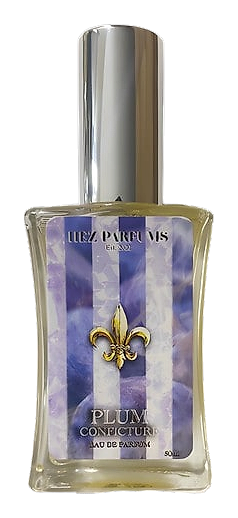
Hez Binkowitz grew up in New Orleans, surrounded by a city that communicates through scent, from beignets dusted with powdered sugar to the damp warmth of a summer storm rolling off the Mississippi. But the memory that became Plum Conficture wasn't a street or a neighborhood. It was a house. Specifically: his grandparents' house, where his grandmother cooked and his grandfather smoked his pipe, and where the combination of those two things felt more like home than anywhere else. The fragrance is a direct translation of that memory. Binkowitz didn't reach for abstraction, he wanted the actual feeling of walking into a kitchen where something had been baking and finding an old man in a chair, surrounded by smoke that smelled like it had been there forever. Plum Conficture is dedicated to that. To the specific, irreplaceable warmth of people who made a space feel occupied before they ever said a word.
What makes Plum Conficture interesting as a composition is its refusal to choose sides. The gourmand register, plum, honey, warm spice, suggests sweetness, comfort, even innocence. But the base does something different. Guaiac wood and oud are resinous, slightly medicinal woods. They're the smell of smoke that has seeped into walls, into clothes, into skin. Tobacco isn't listed as a top note, but it's present in the structure from the beginning, not as a bright leaf, but as a grounding weight that keeps the sweetness from floating away. Amberwood is the bridge. It holds the honey's warmth and the oud's darkness in the same sentence.
The evolution
The opening hits like fruit left out in the sun, dark, almost jammy plum with a sharp edge of cinnamon. There's no pretense of subtlety here. The nutmeg adds a dusty warmth that keeps the fruit from smelling too fresh, too modern. Within the first 20 minutes, the honey arrives, and with it, the first hint of tobacco. Not the aggressive smoke of a men's grooming product, something softer, like the residue in an ashtray that's been left to cool. By hour two, the honey has settled into the composition and the spice has receded. The fragrance becomes quieter, more interior. You smell it most on your wrist and your collarbone, not across the room. The oud and guaiac wood emerge here, not as dominant notes, but as a presence that makes everything else feel grounded. The plum doesn't disappear. It becomes part of the base instead of the top. At hour four to six, Plum Conficture is all drydown. The sweetness is gone. What remains is a warm, slightly resinous wood, the smell of a room where someone has been cooking and smoking, even after they've left.
Cultural impact
Plum Conficture occupies a specific corner of the indie fragrance world, the gourmand Oriental that doesn't apologize for being either. In a market where sweetness is often positioned as a guilty pleasure or a entry-level move, this fragrance treats it as a legitimate mode of expression. The tobacco and oud base elevates it beyond the typical dessert-scent territory, making it legible to people who might otherwise reach for Le Labo or Byredo. The New Orleans brand positioning adds another layer: this is a fragrance made by someone who grew up translating place into smell, and it shows in the specificity of the composition.