
The Story
Why it exists.
The beginning
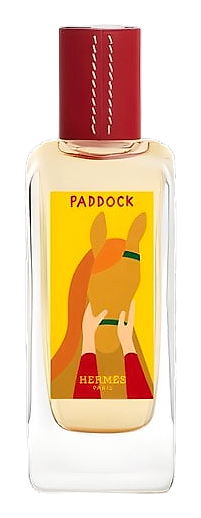
Paddock was born from an invitation Christine Nagel couldn't refuse. The Saut Hermès, an unmissable event in the international equestrian calendar, is where Nagel found her brief: the scent that surrounds riders and horses in the arena's preparation space. Not the show ring, but the space before it. Hay and straw, wood, wax and rich manure, the aromatic world of the paddock. Nagel visited, breathed it in, and set out to bottle something that has no business smelling this refined.
The choice of hay as a structural note is unusual. It reads sweet and honeyed at first, but it's anchored by carrot seed, a material more commonly found in aromatics than fine fragrance. Amber ties everything together, giving the composition warmth without heaviness. What results is a fragrance that smells like an idea: not a stable, but the memory of one. Not horse and rider, but the bond between them. It's Hermès translating equestrian culture into something you can wear without ever having sat in a saddle.
The evolution
The first spray is immediate: sweet, honeyed hay with a brightness that reads almost green. The amber smooths it, keeps it from becoming rustic. Within twenty minutes, the carrot seed emerges, earthy, slightly dry, almost root-like. The combination shifts the fragrance from sunny to grounded. It becomes something quieter, more intimate. By hour three, the leather note that Hermès is famous for appears, subtle but unmistakable, threaded through the composition. It holds through hour six, even as the hay softens and the amber deepens. On skin, the drydown is clean and warm, the kind that stays close for eight hours without ever announcing itself. On fabric, it lasts longer, detectable on a scarf the next morning.
Cultural impact
Paddock arrived in 2024 as a limited edition, and the equestrian connection isn't cosmetic, it's the point. For Hermès, the horse world is heritage, not aesthetic. Wearers who understand this connection find something here that casual fragrance buyers might miss: a scent that smells like a specific place and moment, translated into something wearable. The limited availability has made it harder to find, which has only deepened its appeal among those who know.