The Story
Why it exists.
The beginning
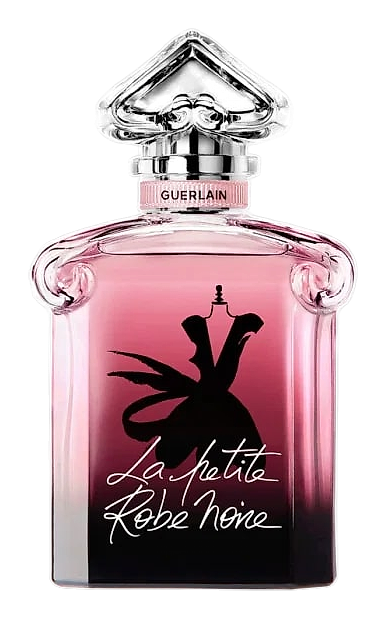
The La Petite Robe Noire structure was reimagined with a softer, more intimate approach. The 2024 answer is L'Eau Rose, the first alcohol-free fragrance in Guerlain's contemporary lineup. Rose water replaces perfumery alcohol as the carrier, and the formula leans into that shift rather than fighting it. The result is a fragrance that opens fresher, evolves differently, and wears closer to the skin than its predecessors in the line.
The use of rose water as a base ingredient is notable. It's not just a marketing angle, the formula genuinely behaves differently without alcohol. Alcohol-free fragrances often project less but evolve more smoothly, with less of the initial alcohol bite that can flatten delicate florals. Here, the rose water lets rose water and rose absolute express themselves with unusual clarity, creating a scent that's simultaneously more natural and more composed than a traditional EDP might deliver.
The evolution
Cherry opens bright, almost candied, before bergamot adds a brief citrus sparkle. Within minutes, the rose arrives in two registers at once: rose water's cool, almost aquatic clarity alongside rose absolute's deeper warmth. Almond emerges as the bridge, lending cream without sweetness. By the second hour, black tea makes its presence known, adding a subtle complexity to the composition. The drydown settles into tonka and patchouli, lingering close to the skin for most of the day. These base notes create a warm foundation that lets the florals continue to whisper beneath the surface rather than fade entirely.
Cultural impact
L'Eau Rose sits comfortably in the contemporary shift toward intimate fragrances, scent that asks to be discovered rather than demanding attention. The cherry-almond-rose combination is approachable enough for daily wear yet sophisticated enough to reward close attention. It's rose without the stereotypes: neither powdery grandmothers' closets nor aggressive florist's buckets. Instead, it reads as modern rose, suited to someone who appreciates Guerlain's craft but wants something softer than the original La Petite Robe Noire.
The House
GuerlainGuerlain stands as one of the oldest and most revered perfume houses in the world, founded in Paris in 1828 by Pierre-François-Pascal Guerlain. What began as a boutique on rue de Rivoli quickly became the preferred destination for Parisian society, attracting dandies and elegant women who sought custom-crafted fragrances. The house's influence grew to such heights that Guerlain earned the title of Official Perfumer to Napoleon III after presenting Eau de Cologne Impériale to Empress Eugénie as a wedding gift in 1853. This royal patronage marked the beginning of Guerlain's enduring association with European aristocracy, as the house went on to create fragrances for Queen Victoria and Queen Isabella II of Spain. Today, under the creative direction of Thierry Wasser, the fifth-generation perfumer, Guerlain continues to shape the landscape of fine fragrance with a portfolio spanning over 1,100 olfactory creations. The house remains headquartered at its legendary Champs-Élysées mansion, a historic monument that anchors Guerlain's position at the intersection of heritage and contemporary luxury.
The Creator
Thierry WasserWasser gravitates toward green, crispy notes and the bold florals Guerlain is known for. Bulgarian rose appears repeatedly in his work, and he travels annually to oversee the harvest in Kazanlak.