The Story
Why it exists.
The beginning
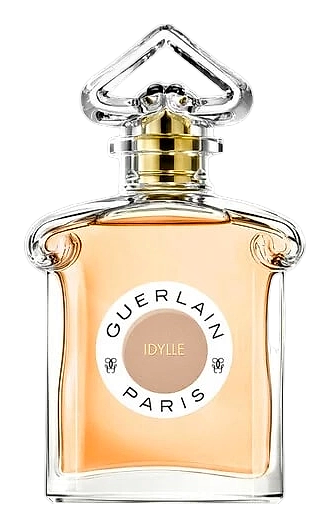
The Idylle family represents Guerlain's exploration of modern femininity, soft and romantic with a contemporary edge. By 2012, house perfumer Thierry Wasser had already released Idylle itself along with rose-patchouli flankers. The spring season called for something specific. Jasmine and lilac occupy the same moment in the calendar each year, one warm, one cool. Idylle Duet Jasmin-Lilas captures that convergence. Wasser built the composition around two blooms that share a seasonal window: jasmine, heady and indolic with its characteristic animalic depth; lilac, green and fresh with a distinctive crispness. The duet's name references the two flowers at its heart. For a house that often favors elaborate storytelling, this straightforward naming speaks to a quiet confidence.
Lilac is one of perfumery's hardest notes to get right. It tends toward either soapy barbershop or synthetic candy, two directions, neither desirable. Getting it to smell like actual lilac, the kind that hangs heavy on a cool morning, requires precision and restraint. Jasmine brings its own challenge: indolic, tropical, capable of overwhelming a composition if the hand isn't steady. Together, they're a tension the perfumer must hold. The solution lives in the green notes, that crisp, almost mineral freshness at the opening, and in the Guerlain signature that runs beneath, barely audible, the house's DNA showing through. Rose bridges the two florals, adding warmth without weight.
The evolution
The opening is lilac, true to life and nothing like synthetic imitations. Green notes add a crispness that reads like morning air, cool, dewy, alive. There's honey in the lilac here, a sweetness with actual weight. Within the first thirty minutes, jasmine begins to emerge. The green notes recede as the jasmine asserts itself, taking the center of the stage. The heart is jasmine and rose, a duet that plays as intended, neither flower dominating, both holding space. The sweetness deepens. Musk begins to anchor. This phase lasts for several hours, the lilac-jasmine duet carrying the composition while the base settles quietly underneath. The drydown arrives gradually. Jasmine fades, but lilac lingers in memory, not as a literal note anymore, but as the impression of it. Musk remains, soft and close. Woodsy notes add quiet structure.
Cultural impact
Idylle Duet Jasmin-Lilas offers lilac that reads as true-to-nature, capturing the flower with an authenticity that rivals dedicated niche compositions. The limited edition status adds urgency. Wearers have noted its distinctive approach to lilac, finding it more natural-seeming than comparable offerings. The fragrance stands apart from typical mainstream florals, offering a different kind of elegance.
The House
GuerlainGuerlain stands as one of the oldest and most revered perfume houses in the world, founded in Paris in 1828 by Pierre-François-Pascal Guerlain. What began as a boutique on rue de Rivoli quickly became the preferred destination for Parisian society, attracting dandies and elegant women who sought custom-crafted fragrances. The house's influence grew to such heights that Guerlain earned the title of Official Perfumer to Napoleon III after presenting Eau de Cologne Impériale to Empress Eugénie as a wedding gift in 1853. This royal patronage marked the beginning of Guerlain's enduring association with European aristocracy, as the house went on to create fragrances for Queen Victoria and Queen Isabella II of Spain. Today, under the creative direction of Thierry Wasser, the fifth-generation perfumer, Guerlain continues to shape the landscape of fine fragrance with a portfolio spanning over 1,100 olfactory creations. The house remains headquartered at its legendary Champs-Élysées mansion, a historic monument that anchors Guerlain's position at the intersection of heritage and contemporary luxury.
The Creator
Thierry WasserWasser gravitates toward green, crispy notes and the bold florals Guerlain is known for. Bulgarian rose appears repeatedly in his work, and he travels annually to oversee the harvest in Kazanlak.