
The Story
Why it exists.
The beginning
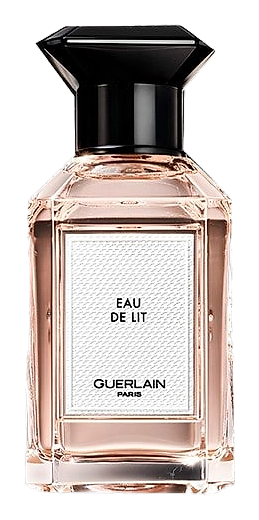
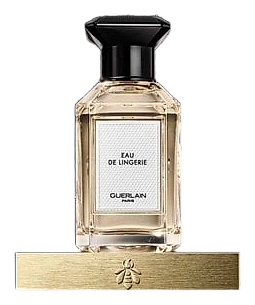
Eau de Lingerie arrived in February 2013, launched on Valentine's Day as part of Guerlain's Les Elixirs Charnels collection. The concept was explicit: a fragrance designed not for skin alone, but for the intimacy of fine fabrics, lingerie, silk, the textiles that live closest to the body. Christine Nagel, tasked with creating something that could live on fabric without overwhelming it, reached for ambrette seed as the anchor. Where most fragrances are composed to announce themselves across a room, Eau de Lingerie was composed to announce itself only to someone already in your space. The name is not a metaphor. It is the brief.
The structure is unusual: a single top note (ambrete seed) opening into a heart of iris and rose, grounded by vanilla, white musk, and sandalwood. No citrus. No sharp edges. Ambrette seed is a naturally musky material, it performs the role of a traditional musk base while functioning as the top note, which means the scent never really opens with brightness. It opens intimate and stays that way. The iris adds the powdery quality that makes it feel like fabric softener done right, not chemical, but warm. Rose is barely there, just enough to keep it from being austere. The vanilla doesn't arrive until the drydown, and when it does, it doesn't project. It settles.
The evolution
At the opening, the ambrette seed reads clean and slightly nutty, not quite almond, not quite skin, something in between. The white musk is immediate but not aggressive; it smells like clean fabric, not laundry detergent. As the composition develops, the iris emerges, and the scent shifts from clean to powdery-soft. The rose is a ghost, present enough to keep the powder from being clinical, invisible enough that most people won't identify it. As the fragrance deepens, the vanilla arrives, warming everything without announcement. The sandalwood keeps the base grounded without adding woodiness; it's creamy here, more texture than scent. What remains is the white musk and vanilla together, close to the skin, impossible to describe as anything other than warm.
Cultural impact
Released in 2013 as part of the Les Elixirs Charnels collection, Eau de Lingerie was designed for intimacy rather than impression. The fragrance is musky and powdery in character, a quiet composition that prioritizes subtlety over projection. It is not a fragrance that announces itself across a room; instead, it offers a close, personal presence that reveals itself only to someone already near. This is the fragrance you wear when you want to smell like yourself, only better.
The House
GuerlainGuerlain stands as one of the oldest and most revered perfume houses in the world, founded in Paris in 1828 by Pierre-François-Pascal Guerlain. What began as a boutique on rue de Rivoli quickly became the preferred destination for Parisian society, attracting dandies and elegant women who sought custom-crafted fragrances. The house's influence grew to such heights that Guerlain earned the title of Official Perfumer to Napoleon III after presenting Eau de Cologne Impériale to Empress Eugénie as a wedding gift in 1853. This royal patronage marked the beginning of Guerlain's enduring association with European aristocracy, as the house went on to create fragrances for Queen Victoria and Queen Isabella II of Spain. Today, under the creative direction of Thierry Wasser, the fifth-generation perfumer, Guerlain continues to shape the landscape of fine fragrance with a portfolio spanning over 1,100 olfactory creations. The house remains headquartered at its legendary Champs-Élysées mansion, a historic monument that anchors Guerlain's position at the intersection of heritage and contemporary luxury.
The Creator
Christine NagelNagel occupies a distinctive space in contemporary perfumery, favoring sensual, textured compositions over the clean minimalism that dominated for decades. Her fragrances often feature unexpected contrasts: mineral and floral, salty and sweet, cool and warm.