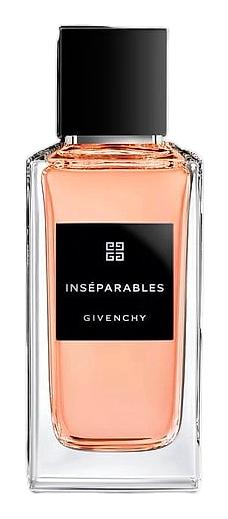

The Story
Why it exists.
The beginning
The name points directly to Givenchy's own past. Inséparables draws from Hubert de Givenchy's debut haute couture collection, launched in Paris in 1952, titled Les Séparables, a name that played on things pulled apart and held together at once. Amandine Clerc-Marie and DSM-Firmenich flipped the idea. Not separated. Inseparable. The fragrance became the concept's mirror: bright mandarin and petitgrain in the opening, rose and ylang-ylang in the heart, patchouli and vetiver in the base, three stages where each layer arrives and holds, never fully ceding ground to what comes next.
The rosa centifolia here is not a shy flower. It's a densely petaled, pollen-rich French rose, bold, almost medicinal in its richness. The petals seem to hold onto their scent with an almost stubborn persistence, each one layered with a heady, floral intensity that speaks of real botanical material rather than synthetic approximation. Ylang-ylang adds waxy warmth, the smell of tropical petals left too long in the sun, sweet without being sugary. The unusual element is the opening's bitter petitgrain.
The evolution
The opening announces mandarin's sweetness against petitgrain's bitter almost immediately, a botanical tension that reads as bright, clean, and slightly astringent. Then the rose arrives. Not the polite rose of conventional florals, this one has weight, a density that suggests the real flower rather than its abstraction. Ylang-ylang follows, warm and waxy, settling over the rose like afternoon heat. The drydown is where patchouli and vetiver take over, earthy, root-like, present. Moderate sillage throughout. The vetiver lingers longest, clinging to fabric and skin long after the rose has faded, its presence lingering in the background as if reluctant to fully release its hold.
Cultural impact
Inséparables entered the Givenchy lineup in 2026 as part of La Collection Particulière. For wearers seeking something intimate rather than projecting, it occupies a specific space: a floral-woody composition that refuses easy categorization. The bitter petitgrain opening has drawn divided opinions, some find it dissonant, others find it the exact thing that elevates the rose that follows. The moderate sillage suits close encounters; this is not a fragrance that announces itself across a room. The patchouli-vetiver drydown lasts into the following day on fabric, a quiet persistence that outlasts most conversations.