
The Story
Why it exists.
The beginning
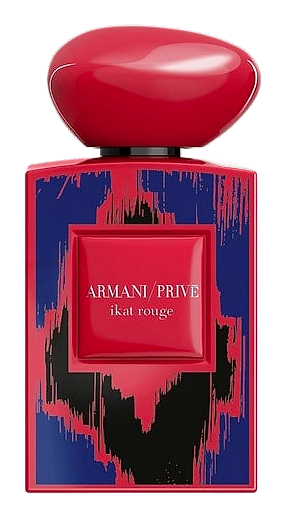
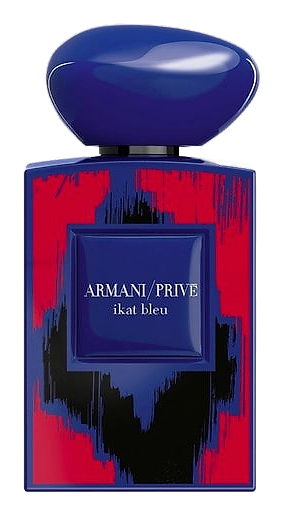
Ikat Bleu arrives from the Armani Privé Spring/Summer 2020 collection, a limited series where fabric technique becomes olfactory metaphor. Ikat is a dyeing method, staggered resist-dyeing that builds pattern through patience. The fragrance translates this: layers that accumulate, each one changing what came before. Juliette Karagueuzoglou composed it for a collection defined by structure and restraint, where the Armani Privé codes of studied luxury run strongest. This is haute parfumerie that borrows from craft traditions, not just nature.
What makes Ikat Bleu hold together is the smoke-powder axis. Incense and iris rarely share space without one overwhelming the other, here they negotiate. The incense brings its smoky, balsamic weight. The iris brings its powdery, almost violet softness. Neither capitulates. The black vanilla husk in the base is what makes the whole thing cohere instead of conflict: a sweet, dark vanilla that isn't dessert, isn't clinical. It's the vanilla of a burnt-out candle, the last wisp of something that was once lit. Guaiac wood keeps the drydown woody without sharpening into something sharp. Musk holds it close.
The evolution
The opening arrives confident and bright: pink pepper's clean spice alongside bergamot's citrus sharpness. Two minutes in, the bergamot recedes and the pepper settles into something warmer. By the first thirty minutes, incense takes the stage, smoky, resinous, the smell of something burning low and slow. The iris arrives around the hour mark, powdery and slightly sweet, threading through the smoke like a counter-melody. This is the fragrance's longest phase, the heart where smoke and powder argue and reconcile. The drydown begins around hour four: vanilla husk and musk emerging as the incense softens, the iris settling into something quieter. By hour six, what remains is close, warm, skin-adjacent, vanilla smoke without the fire, a whisper rather than a statement.
Cultural impact
Ikat Bleu arrives in a moment when contemporary perfumery is reexamining its relationship with traditional craft techniques. The ikat dyeing technique referenced in the fragrance name, particularly associated with Uzbekistan and Indonesia, represents a resist-dyeing method where threads are dyed before weaving, creating blurred feathered patterns that resist precision. This parallels the fragrance's approach to note composition, where smoky incense and powdery iris do not obviously complement each other but find a working tension. The 2020 launch timing places Ikat Bleu within a broader revival of iris-focused compositions that began in the 2010s, responding to wearers seeking complexity over projection.