The Story
Why it exists.
The beginning
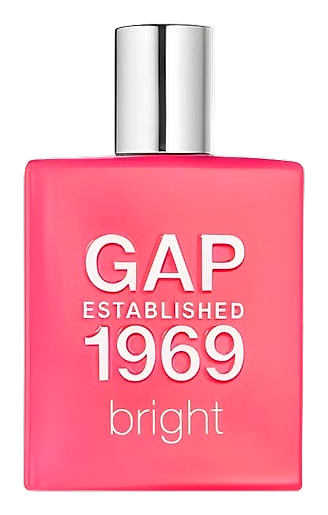
Gap Established 1969 Bright landed in 2013 as part of the brand's ongoing effort to make fragrance feel like something you reach for without overthinking it. Developed by perfumer Patricia Choux, the brief was simple: something bright, sweet, and easy to wear. Not a statement. Not a projection. Just a pleasant presence that fits into a Tuesday morning as easily as a Saturday afternoon. Choux structured Bright around the idea of contrast, fruit that pops at the opening, florals that soften the middle, and a base that keeps things warm without weighing anything down. The choice of pink lady apple as a signature note gave the composition a specific tartness that distinguishes it from generic berry openings. Tangerine brings the sunshine, raspberry brings the brightness, and the rest holds the line for a few hours before stepping aside.
What makes Bright work is its refusal to overcomplicate. Most fruity-florals in this category lean into one note family or the other, Bright splits the difference with unusual restraint. The hortensia (hydrangea) in the heart is an uncommon choice, rarely appearing in mainstream fragrances, and it gives the floral layer a softer, almost powdery quality that lifts the composition rather than weighing it down. The pink vanilla crystals in the base are doing quiet work. Not as bold as a straight vanilla, but warmer than a musk alone.
The evolution
Bright opens fast. Raspberry hits immediately, tangy and bright, followed by tangerine and that distinctive pink lady apple, a sweet-tart combo that doesn't feel like every other berry fragrance. The synthetic fruit quality is present here, part of the charm rather than a flaw. Within twenty minutes, the florals take over. Lily of the valley and hortensia push the composition into softer territory, clean, slightly powdery, the smell of something freshly laundered. The fruity brightness doesn't disappear, but it recedes, becoming a background warmth rather than the main event. By hour two, the vanilla and musk arrive. This is where Bright earns its name, not through loudness, but through a gentle, warm glow that sits close to the skin. The woody notes add structure without adding weight. By hour three, on most skin types, the sillage drops to intimate. What remains is that pink vanilla, soft and clean and unobtrusive. The kind of scent someone notices only if you're close enough to hug.
Cultural impact
Gap Established 1969 Bright arrived during a period when mass-market fragrances were shedding their reputation as predictable or boring. The early 2010s saw a push toward accessibility in perfumery, and Bright exemplified this movement by delivering a polished fruity-floral at a price point that didn't require compromise. Its cheerful, unpretentious character resonated with consumers seeking everyday luxury without intimidation. The fragrance contributed to normalizing bold fruit notes like raspberry and tangerine in mainstream releases, paving the way for subsequent fruity expansions across multiple brands. Patricia Choux's design prioritized wearability and mass appeal, reflecting Gap's broader fashion philosophy of approachable style.