The Story
Why it exists.
The beginning
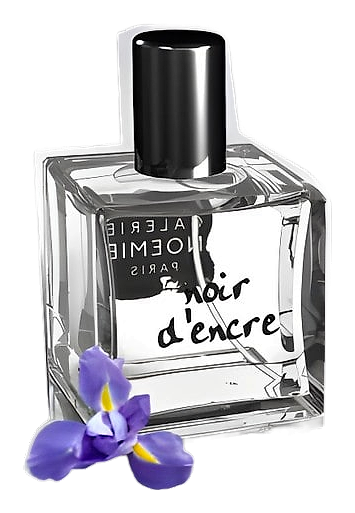
Noir d'Encre is named for darkness itself, the deep black of ink, of nothingness, of a page before the first word. In 2002, Annick Ménardo built that concept from resin and smoke, selecting frankincense as the opening statement and myrrh as the counterweight. The name came first. Everything else followed from there, the composition an attempt to make darkness you could actually smell.
The key to this fragrance is its unusual balance: warm resins held in check by cool iris. Ménardo built a smoky, balsamic base and then threaded it with a powdery violet floral that keeps everything from becoming too heavy. The result is a dark fragrance that breathes. Opoponax adds a sweet, slightly animalic dimension that most modern smoky-orientals skip entirely. It's an older kind of composition, one that takes its time.
The evolution
The opening is smoke first. Not aggressive, more like the ghost of incense in a closed room. Then the iris arrives, earlier than expected, threading its cool powder through the darkness like ink dispersing in water. The myrrh and opoponax build slowly, their balsamic sweetness deepening the composition without overwhelming it. An hour in, something shifts. The smoke doesn't disappear, it becomes a backdrop rather than a foreground. The iris pulses through, creating a cool-floral counterpoint that keeps the warmth honest. This is where Noir d'Encre earns its name. The drydown is intimate. Ambergris and musk settle close to the skin, with the iris lingering as a memory, faint, powdery, personal. The next morning, there's a trace of warmth on fabric that wasn't there before.
Cultural impact
Noir d'Encre occupies an unusual space, neither fully floral nor traditionally oriental. Annick Ménardo's smoky-floral territory has its admirers, and this 2002 release sits among her more distinctive compositions. For those drawn to the powdery-floral meets smoky-resinous tension, it remains a reference point.