
The Story
Why it exists.
The beginning
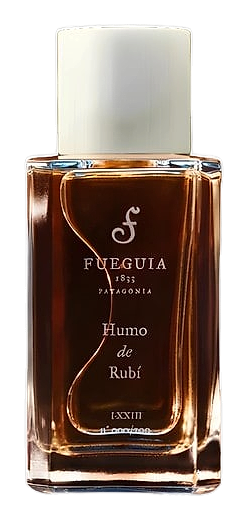
Humo de Rubí was released in 2023 as part of the Alquimia collection, Fueguia's laboratory of scent transformations. The name means ruby smoke in Spanish, and it arrives already committed to its own mythology. Where most fragrances borrow their stories, this one writes its own on arrival. The three-note structure is unusual enough to be a statement: champaca rather than rose, oud from New Caledonia rather than the expected source, orchid rather than the usual woody anchor. Each material was chosen not for convention but for what it does to the others. The ruby in the name is literal, the fragrance evokes red flowers, resinous heat, and the kind of smoke that lingers long after the flame goes out. It's niche made for people who've already been through niche and wanted something stranger.
The combination itself is what makes Humo de Rubí worth examining. Champaca is not a common leading note, it carries tropical weight and a fleshy sweetness that most perfumers use sparingly, as accent rather than protagonist. Making it the tonic note, the thing the whole composition orbits, is a deliberate choice. The New Caledonian oud adds a different kind of darkness, less bombastic than some Southeast Asian ouds, more resinous, with a woodsmoke quality that presses against the floral sweetness without smothering it. And the orchid base (queen-of-the-night) is a night-blooming flower, sweet and powdery at once, which adds shadow to what could otherwise read as pure brightness.
The evolution
Champaca announces itself immediately, no hesitation, no top-note courtesy period. The sweetness is immediate and tropical, heavy with the smell of something blooming without apology. Two hours in, the oud takes over the structural role. It's not a dramatic swap, the champaca is still there, underneath, keeping the warmth alive, but the oud reshapes the composition's architecture, pressing the sweetness inward and downward. Six hours in, the orchid emerges. This is the slow reveal the fragrance has been building toward. Queen-of-the-night is not a loud flower. It unfolds at dusk, releasing a scent that is sweet and powdery and distinctly nocturnal. The ruby smoke from the name appears here, a resinous, low-burning warmth that rises from the base rather than projecting from the top. The drydown lasts another two to three hours on most skin, settling into something close and intimate, present but not insistent. The morning after, there's a faint warmth at the pulse points. Not quite ghost, not quite memory. But something that makes you want to wear it again.
Cultural impact
Humo de Rubí occupies a specific corner of the niche market, floriental density with oud structure, sweet enough to be noticed and heavy enough to polarize. It's not trying to please everyone. The name alone, ruby smoke, suggests something literary and strange. Wearers who connect with it tend to describe it as memorable in a way that goes beyond compliments, it's the kind of fragrance people ask about, then smell on themselves and understand why it stopped them. It's for people who've been through niche and wanted something stranger.