The Story
Why it exists.
The beginning
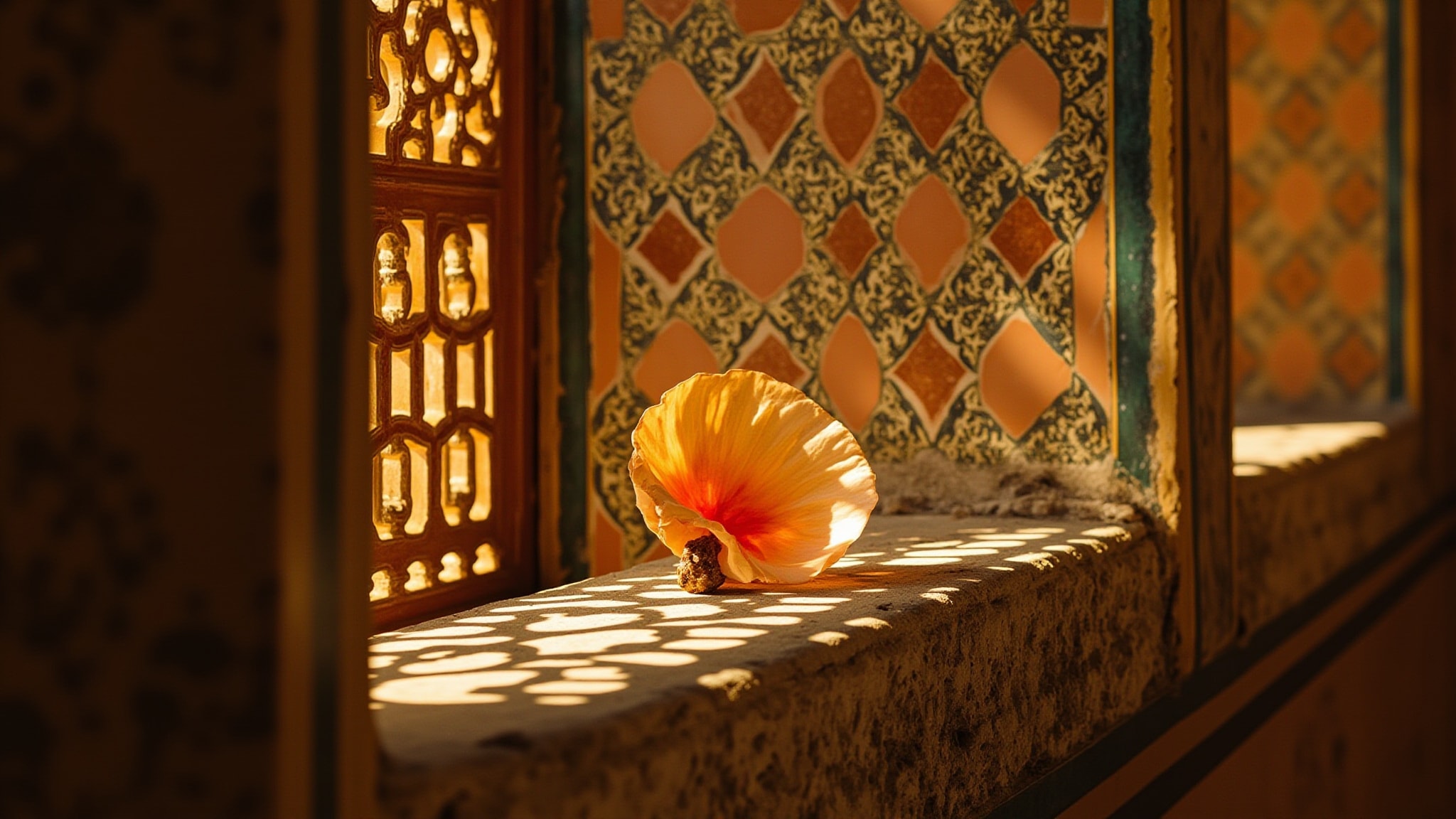
Alhambra takes its name from the fortress complex in Granada, Spain, built at the height of the Arab empire. The fortress itself was named The Red One, after the sun-dyed bricks from which it was made, and Moorish poets of the era described the palace as a pearl set in emeralds, with its surrounding trees, the Cipres variety, standing as the amber beside the gemstones. The image of warm stone against cool green, a jewel-and-frame dynamic that has echoed through centuries of Andalusian poetry, anchors the composition. Part of a series for Fueguia 1833 called Destinos, launched in 2018, Alhambra reads less as a postcard of Granada and more as the temperature of standing inside those walls at dusk. The formula keeps to three pillars: amber, ambergris, rose.
Three-note compositions are uncommon in modern perfumery, and rarer still when one of the notes is ambergris. The material is famously scarce, traditionally harvested from sperm whales, though modern versions frequently use plant-based or synthetic reconstructions. It brings a salt-warm depth with a faintly animal edge that no other natural material replicates, which is why it has anchored fine fragrances for centuries.
The evolution
The first thirty minutes are deceptive. Rose arrives first, but it's not a lush, garden-variety rose. It's dusty, almost sour, with a papery dryness that reads more like rose petals pressed in a book than anything fresh-cut from a garden. The opening carries an almost deliberate austerity, a floral note stripped of its usual sweetness, held at arm's length. Underneath, amber begins as a low resinous hum, more suggestion than statement. It registers as warmth before it registers as scent, a thermal impression rather than a fragrant one. By the two-hour mark, the amber has climbed. It carries a spicy sweetness, dense and almost chewy, and it lifts the rose along with it, giving the composition its first real fullness. The ambergris weaves through both, never fully announcing itself, but giving the whole composition a salted, skin-warm undertone that keeps the sweetness in check.
Cultural impact
Alhambra sits within Fueguia 1833's Destinos collection, a series that uses geographic destinations as its organizing principle. Its three-note structure and the placement of rose in the base position it as a study in restraint rather than ornament. The fragrance appeals to people drawn to amber compositions with character, those who want warmth without the usual sweetness overload, or who are looking for a rose that doesn't behave like a traditional rose. Wearers often describe encountering it as a discovery rather than a selection, the kind of scent that reveals itself through repetition rather than landing fully formed on first contact.