
The Story
Why it exists.
The beginning
The idea that fragrance can be sculpture. This scent captures that liminal moment: when summer afternoon bleeds into evening, when the day's heat still clings but the air starts to cool. The composition moves with the light, shifting from the warmth of late afternoon into the softness of approaching dusk. There's a quality to this fragrance that feels like the last golden hour before nightfall, when shadows lengthen and the world holds its breath
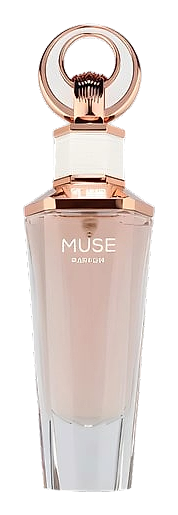
The note structure is interesting because it doesn't shout. Sweet pea and gardenia are delicate florals that could easily disappear in louder compositions. Here, they're supported by a base that keeps them grounded without overwhelming, cashmere wood, cedar, sandalwood create a warmth that lingers. The coconut and mango ice cream in the opening feel like a memory of summer rather than an assault of tropical. It's the difference between eating ice cream and remembering what ice cream tastes like. That subtle distinction is where Muse lives.
The evolution
The opening arrives soft, coconut and mango cream without the sharp edge either could bring. Pink pepper provides a tiny spark, barely perceptible, just enough to keep things interesting. Within minutes, the florals arrive: sweet pea first, then gardenia expanding slowly like something warming in sunlight. The evolution is gradual, almost imperceptible, until suddenly you're in the drydown and wondering when the transition happened. That's when sandalwood and cashmere wood take over, a warm, close, intimate base that stays near the skin. It doesn't project aggressively. It simply exists with you, a companion rather than a statement. On fabric, it lingers for hours. On skin, plan for 6-8 hours of quiet presence. The next morning? A ghost of warmth remains, something soft and floral that makes you wonder if you imagined it.
Cultural impact
Muse arrives at a moment when consumers are moving away from loud, projection-heavy fragrances. It's a counterpoint, intimate, personal, meant to be discovered rather than announced. The Andrea Maack aesthetic attracts those who see fragrance as an extension of identity rather than a statement. Muse fits that philosophy: not trying to fill a room or start conversations. For the person who wants scent to be a secret shared only with those who get close enough to notice.