
The Story
Why it exists.
The beginning
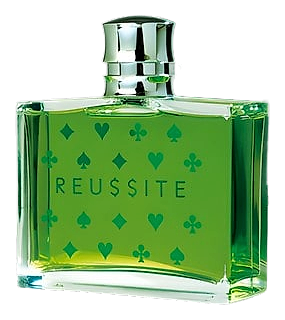
The composition reads like a confident answer rather than a question. Frédéric Munoz, the perfumer, constructed it around a deceptively simple premise: let patchouli lead, then give the woods something to do. The official line describes it as a woody note contrasting with a bed of spices, and that's accurate but undersells the intent. This is a scent built for the man who treats grooming as infrastructure, not decoration. Reussite sits firmly in a tradition where the raw materials do the talking, and the formula doesn't apologize for what it is. No pineapple, no bergamot, no rose and jasmine theatricals. Just the notes that earn their keep: patchouli opening the door, cedar, sandalwood, and vetiver filling out the architecture, musk and spices handling the close.
What's interesting here is the structural inversion. Most men's woody fragrances of this register build from the top down: a bright opening, a floral or spicy middle, then a woody drydown. Reussite flips that. Patchouli opens alone, then the heart introduces three woods simultaneously: cedar for structure, sandalwood for creaminess, vetiver for the earthy, slightly bitter edge. The base settles into musk and spice, with the spice acting as a connective tissue rather than a separate event.
The evolution
The first minutes are almost entirely patchouli, but not the dusty, incense-shop version most people associate with the note. It's cleaner here, almost raw, like the leaf before it's been dried and aged. The woods arrive gradually, cedar emerging with its pencil-shaving sharpness, then sandalwood smoothing the edges into something that reads as warm rather than sharp. Vetiver brings the final piece of the heart, a slightly smoky earthiness that grounds everything. The transition into the base is quiet. Musk and spices take over, and the drydown settles into a warm, woody close that stays intimate. On clothing the next day, the cedar and sandalwood linger, stripped of the patchouli's intensity, leaving something that smells like a good piece of furniture that's been in a room where someone interesting lives.
Cultural impact
Reussite occupies a specific corner of men's fragrance: the patchouli-forward, wood-driven category that rewards people who already know what they want. It doesn't chase the bright citrus crowd or the oud-leaning luxury segment. Instead, it speaks to a wearer who treats fragrance as a settled preference rather than a discovery project. The composition treats patchouli and vetiver as foundational rather than nostalgic, and the overall effect is one of confidence without volume. There's nothing apologetic about it, nothing trying to win you over with sweetness or surprise.
The House
Frederic MFrederic M is a French fragrance and cosmetics house that has been creating products in France since 1983. The brand positions itself around the idea of healthy beauty, using organic ingredients that meet French regulatory standards. Its catalogue includes a modest but distinctive line of perfumes such as Marmara, Fleur De Paradis (2020), Djohao and Rose De Mai, alongside face and body care items and colour cosmetics. Each offering carries a quiet confidence, reflecting a commitment to purity rather than flash. The brand’s French roots are evident in every bottle, label and formulation, giving consumers a sense of continuity with traditional French craftsmanship while embracing contemporary organic trends.
The Creator
Frédéric MunozMunoz favors a minimalist palette, often centering a composition around a single floral or woody note and building subtle supporting layers. He reaches for ingredients that retain clarity: Tunisian jasmine, Moroccan ambergris, and fine vetiver from Haiti appear repeatedly in h…