The Story
Why it exists.
The beginning
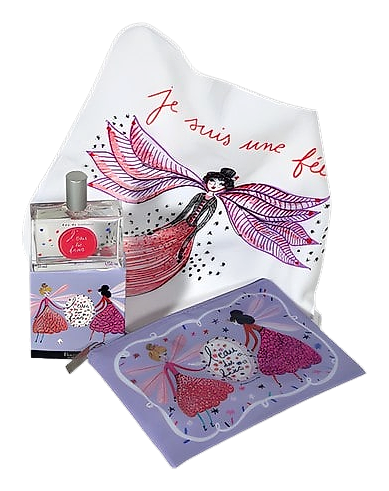
The name says it all. Eau des Fées, water of the fairies, is a nod to Grasse's legendary flower fields, where jasmine and rose have been cultivated for centuries and where something lighter than legend, something playful, has always had its place. This isn't a fragrance that arrived from strategy or trend-watching. It came from the simple idea that tender, youthful sweetness deserves a proper French pedigree. Fragonard's perfumers built the composition around a tension: bright citrus top notes meeting a heart of orchard fruits and white florals. The result feels like morning dew on petals, crisp, clean, but with a softness underneath that keeps it from feeling clinical. The caramel and raspberry base grounds it in warmth without heaviness. It is, as the house puts it, perfume for the tender age, and that tenderness is not naivety. It is a deliberate, carefully calibrated lightness.
What makes Eau des Fées work is restraint. Sweetness can easily tip into confection, but here the caramel reads as warmth rather than sugar. The raspberry adds a tartness that cuts through at just the right moment, keeping the composition from flattening out. Freesia is the unsung hero, it bridges the gap between the sharp lemon opening and the softer heart, giving the transition an almost dewy quality. This is not a complex fragrance designed to reveal new facets over hours. It is coherent from start to finish, which is its own kind of sophistication. The lily of the valley note deserves attention too.
The evolution
The opening is all citrus brightness, lemon that reads like zest, not cleaner. Freesia arrives within seconds, softening the edges and introducing the floral register. Thirty minutes in, the heart begins to assert itself: apple and peach emerge alongside jasmine and orange blossom, turning the scent from sharp to rounded. The lily of the valley keeps everything grounded in something green and almost aquatic. By the second hour, the caramel begins its slow rise. It doesn't overtake the florals, it underpins them, adding body without weight. The raspberry arrives last, lending a tartness that catches the light. The drydown is intimate by design: this is not a fragrance that announces itself across a room. It stays close, a warmth that someone beside you will notice before you do. On fabric, the florals linger longest, the jasmine and orange blossom outlast the citrus by several hours. On skin, expect the caramel and raspberry to hold through hour six, fading gently into something clean and skin-like. It does not transform dramatically overnight.
Cultural impact
Eau des Fées occupies an interesting space in Fragonard's catalogue: it's marketed as a scent for younger wearers, but its quality has earned it a broader following. Wearers describe it as cheerful and playful, the kind of fragrance that lifts a mood without overwhelming a room. The community notes compare it favorably to higher-end fruity florals, one reviewer called it a solid hair shampoo scent, which is both a criticism and a compliment: it's clean, it's approachable, it's the kind of smell you want to bury your nose in. In a market flooded with aggressive sweetness, Eau des Fées offers something gentler: the same joy without the hangover.