The Story
Why it exists.
The beginning
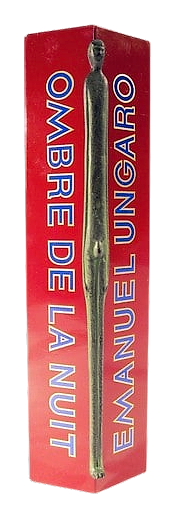
Ombre de la Nuit arrived in 1993 as Emanuel Ungaro's personal fragrance, not a commercial release, not a calculated expansion of the line. François Demachy crafted it as an intimate statement from the house itself. Only 12,000 bottles were made. This was the Ungaro aesthetic stripped to its most essential, most private form. The fragrance carries a name that speaks directly to its character, something shadowy, nocturnal, reserved. From the first spray, you sense the deliberate restraint: the composition doesn't announce itself but rather settles close, revealing itself gradually rather than declaring its presence.
What makes Ombre de la Nuit interesting is how it handles leather. Not the cold, industrial leather of so many masculines. The civet gives it a feral edge, but tonka bean and amber are present as well. It's an unusual balance: the sharp, animalic base of a leather fougère married to the powdery warmth of an amber floral. The result is a leather that feels worn-in from the first spray, not a leather that needs to be broken in. Ylang-ylang and jasmine sit beneath the leather, sweetening its edges. Carnation adds another layer.
The evolution
The opening is brief, bergamot and a flash of spice, there to lift the leather just enough. Within minutes, leather arrives and stays. The florals, ylang-ylang, jasmine, carnation, don't try to compete. They sit beneath the leather, sweetening it, keeping it from becoming harsh. The drydown is where Ombre de la Nuit earns its name. The leather fades to something softer, something closer to the skin. Tonka bean, orris, honey, and powdery amber take over. What surprises is the civet: present throughout, but never dominant. It gives the drydown its animalic staying power, the sense that this fragrance is alive on your skin.
Cultural impact
Ombre de la Nuit emerged in 1993 as a singular statement from Emanuel Ungaro. François Demachy composed it as the house's personal fragrance rather than a mass-market release. With only 12,000 bottles produced, it occupied a different space than typical fashion perfumes. The fragrance blended civet, leather, and powdery amber into an unusual balance: the sharp, animalic base of a leather fougère married to the powdery warmth of an amber floral. This composition captured something distinctive in leather fragrance, moving beyond the cold, industrial leather of so many masculines toward something with more complexity and nuance.