The Story
Why it exists.
The beginning
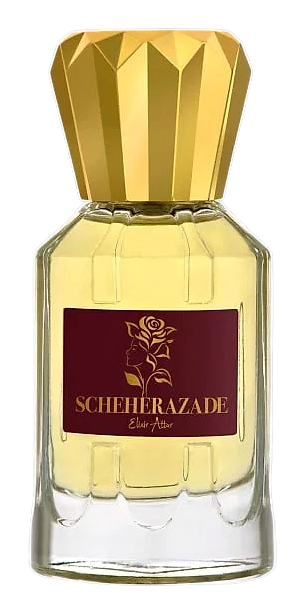
Scheherazade by Elixir Attar is named for the legendary storyteller of One Thousand and One Nights, the woman who kept herself alive through narrative alone. The fragrance was composed by perfumers Ahmed Mostafa and Günel Mostafa. The choice is deliberate. Scheherazade's survival depended not on spectacle but on the slow accumulation of detail, every evening building on the last until a complete world existed. That patience lives in this fragrance. No single note rushes. Nothing performs. The composition unfolds the way a story does when the teller knows exactly how long the listener will stay. Each layer waits its turn, revealing itself only after the previous one has settled into the skin.
The composition draws on materials that carry their own weight in Arabian perfumery, and it treats them with the respect such materials deserve. Coffee and dates appear together, two notes that share an earthy sweetness but also a bitterness, each one grounding the other. The Hainan oud sits beneath both, not shouting but anchoring the structure with its particular woody depth. Saffron adds a metallic thread that runs through the whole wear, bright enough to keep the heavier notes from sinking.
The evolution
The opening arrives dense and smoky, almost like walking into a room where bakhoor was burned hours earlier and the resin still clings to curtains. Saffron cuts through quickly, adding a metallic brightness that keeps the spice from feeling heavy. Arabian spice notes sharpen the edges further, giving the first fifteen minutes a savory quality more than a sweet one. Coffee sits underneath, unmistakable but restrained, offering bitterness rather than the dessert warmth many expect from the note. By the thirty-minute mark, the composition begins its turn. Dates emerge at the heart, bringing a brown, caramelized sweetness that rounds out the sharpness. The Hainan oud surfaces slowly, not as a barnyard punch but as something quieter, a woody darkness that thickens the air without dominating it.
Cultural impact
Scheherazade sits within a growing conversation about what Arabian perfumery looks like when it is composed by people who actually work with these materials. The fragrance draws on bakhoor, oud, coffee, and dates, all elements with deep roots in Gulf and Levantine domestic life, and it presents them without the heavy hand of projection or sweetness that often marks Western interpretations of Arabian scent. Wearers familiar with real bakhoor, the kind burned in actual homes rather than the abstracted idea of it, will recognize the resinous undertone that runs through the composition.