The Story
Why it exists.
The beginning
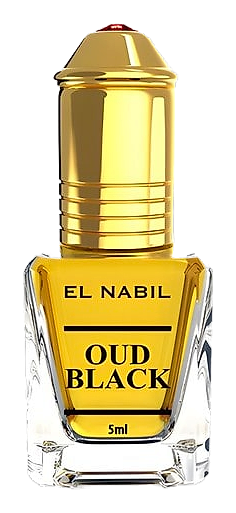
Some fragrances announce themselves. Oud Black simply walks in and stays. Part of El Nabil's catalogue, this composition takes the house's interest in resinous, oriental materials and distils it into something direct. Vetiver leads, but not as the crisp, green root most people associate with that word. Here it's earthy and mineral, pulled toward the soil rather than the leaf. The frankincense that follows arrives dense and unhurried. It doesn't freshen. It deepens. Then the base does what El Nabil does well: builds a foundation from materials that carry weight and history. Patchouli brings the shadow. Benzoin brings the sweetness that softens everything without making it soft. The pyramid lists Agarwood (Oud) in the base notes, so the name earns its place in the composition.
What's interesting here is the restraint. Oud Black pulls away from sweetness almost entirely. The benzoin is there, but it functions as glue rather than as a statement. The real weight sits on frankincense, a material that in this composition takes centre stage through the heart. It carries a resinous, almost liturgical character, the kind of scent that drifts through quiet stone spaces and heavy wooden doors. Pairing it with vetiver at the top is an unusual choice. Vetiver usually grounds a fragrance; here it opens one.
The evolution
The opening moments are the most deceptive. Vetiver comes in dry and slightly green, and for a moment you might wonder if you've reached for the wrong bottle. Then the frankincense arrives, and it doesn't ease in. It takes over. The smoke thickens, gains body, picks up a faint medicinal edge. Patchouli surfaces soon after, dark and slightly damp, like turned earth after rain. Benzoin trails behind it, warm and low, the way amber feels when it's not actually amber. As the composition settles it compresses into something close and dense. The vetiver retreats. The frankincense mellows into a softer, almost creamy register. What remains is patchouli over benzoin, and that pairing holds well through the late hours, neither fading into nothing nor shifting character dramatically. On fabric, what lingers is benzoin and a trace of something smoky. Nothing fresh. Nothing bright.
Cultural impact
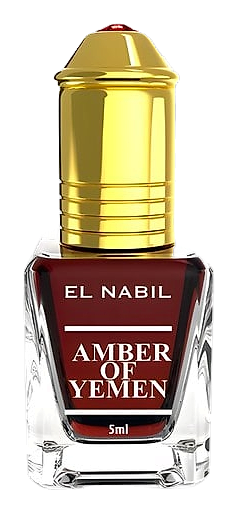
Oud Black sits comfortably within El Nabil's catalogue of resinous, incense-driven releases. Wearers tend to be people drawn to the heavier, more atmospheric end of fragrance, the ones who want something that feels like a place rather than a product. Comparisons on community databases place it near other resinous fragrances including the brand's own Amber of Yemen in its warmth, and further afield alongside compositions like Amouage Interlude Man for its incense intensity. It won't announce itself the way a designer release does. It doesn't need to.