The Story
Why it exists.
The beginning
Boheme arrived in 1995 as part of Eau Jeune's experimental decade, the house moving beyond crisp citrus into something warmer and more personal. The name itself says it all. Bohemian. A woman who moves through the world on her own terms, collects moments instead of labels, wears what she likes because she likes it. Eau Jeune framed this as a scent-journal entry, a fleeting impression captured in glass. Not a statement. A mood.
What makes Boheme interesting is its structure. The watermelon note was unusual in 1995, a fruit-forward top that added brightness without sweetness. Below that, the white floral heart of jasmine and lily of the valley keeps things grounded and feminine without tipping into romance. The sandalwood base is the quiet anchor, adding warmth and a subtle powderiness that extends wear time. It is fruity, floral, and woody in equal measure. Nothing dominates. Everything collaborates.
The evolution
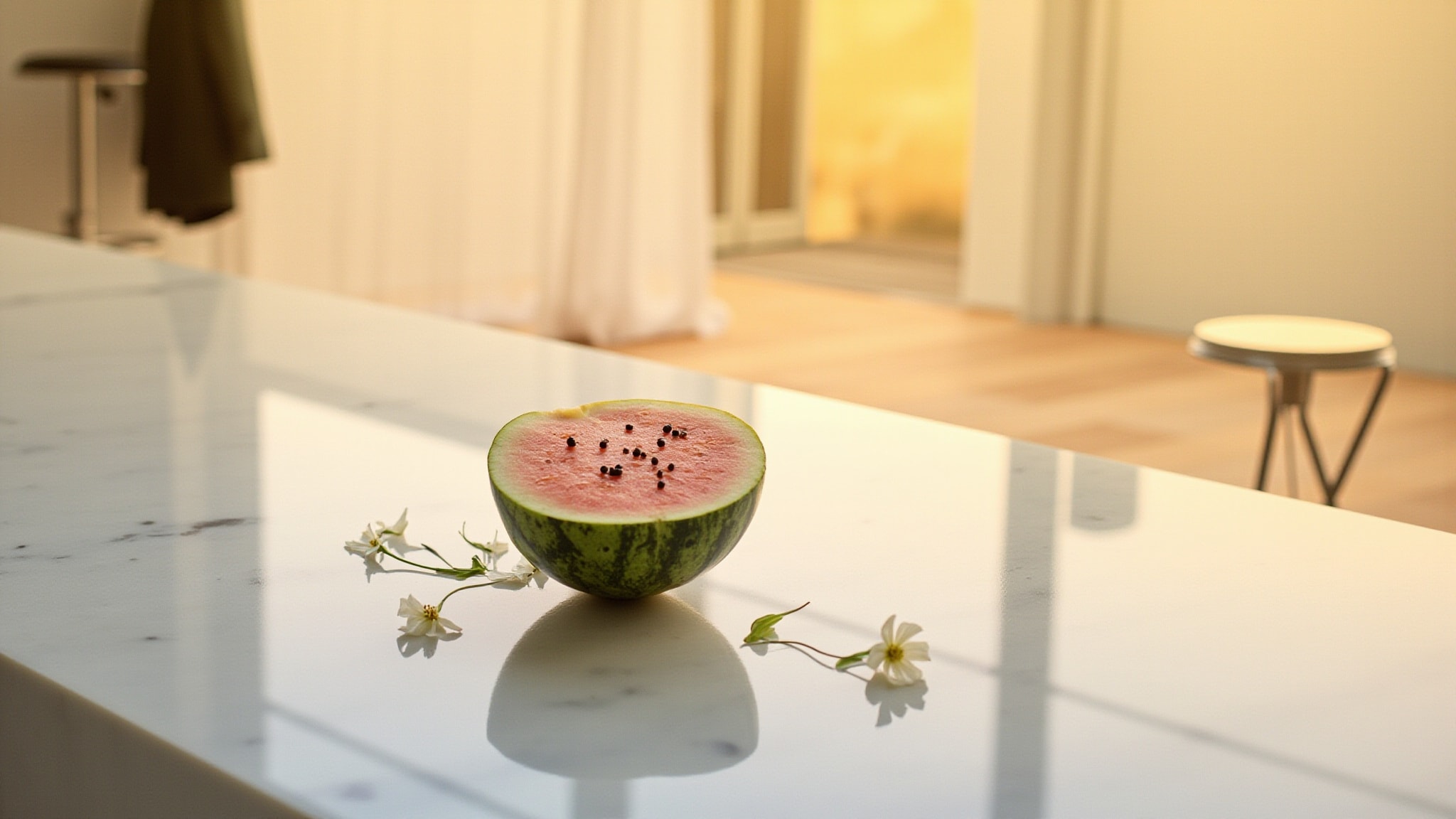
The opening hits bright and cool, watermelon cutting through bergamot like a glass of water on a hot morning. It lasts fifteen minutes before the florals take over. Jasmine rises first, creamy and green, followed by rose that softens everything without sweetening it. Lily of the valley appears as a supporting note, adding freshness without contributing much strength. This heart lasts two to three hours on most skin types. Then the sandalwood arrives. Slow. Creamy. Powdery at the edges. It does not announce itself. It simply lingers, close to the skin, for the remaining hours. The drydown is intimate, not projecting, meant for the wearer more than the room.
Cultural impact
Boheme occupies an interesting position as a 1995 release in the floral-fruity category. The watermelon top note was ahead of its time, anticipating fruit-forward trends that would dominate women's fragrances in the 2000s and beyond. Wearers who remember it from the era describe it as a nostalgic companion, a scent tied to specific summer memories and the carefree energy of the decade. The fragrance has developed a small cult following among those who seek vintage compositions that were never reformulated or discontinued without notice. It is not discussed in mainstream fragrance circles, which suits its nature. Boheme was never meant to be loud.