The Story
Why it exists.
The beginning
Antiu is Dawn Spencer Hurwitz's modern riff on Metopion, an ancient perfume formula that circulated for roughly 300 years before Pliny the Elder and Dioscorides ever wrote it down. Hurwitz chose the name Antiu as a modern label for the composition, then rebuilt the skeleton around what a 21st-century nose could actually source. It landed in 2013 as part of her New Kingdom collection, a series she framed as translations rather than copies. The goal wasn't archaeological fidelity. It was capturing what made those old formulas feel alive, then letting them breathe in a Colorado studio. The collection itself nods to ancient perfumery traditions while remaining rooted in contemporary practice, and Antiu sits at the center of that philosophy.
What makes the composition worth slowing down for is the sheer weight of resin packed into a single frame. Galbanum leads with a sharp, almost metallic green, the kind of note that reads as cold and cut, like snapping a stem. Then the base shifts hard into frankincense, myrrh, opoponax, copaiba balsam, peru balsam, and mastic, a dense stack of resinous materials that anchor the whole structure. The heft is intentional.
The evolution
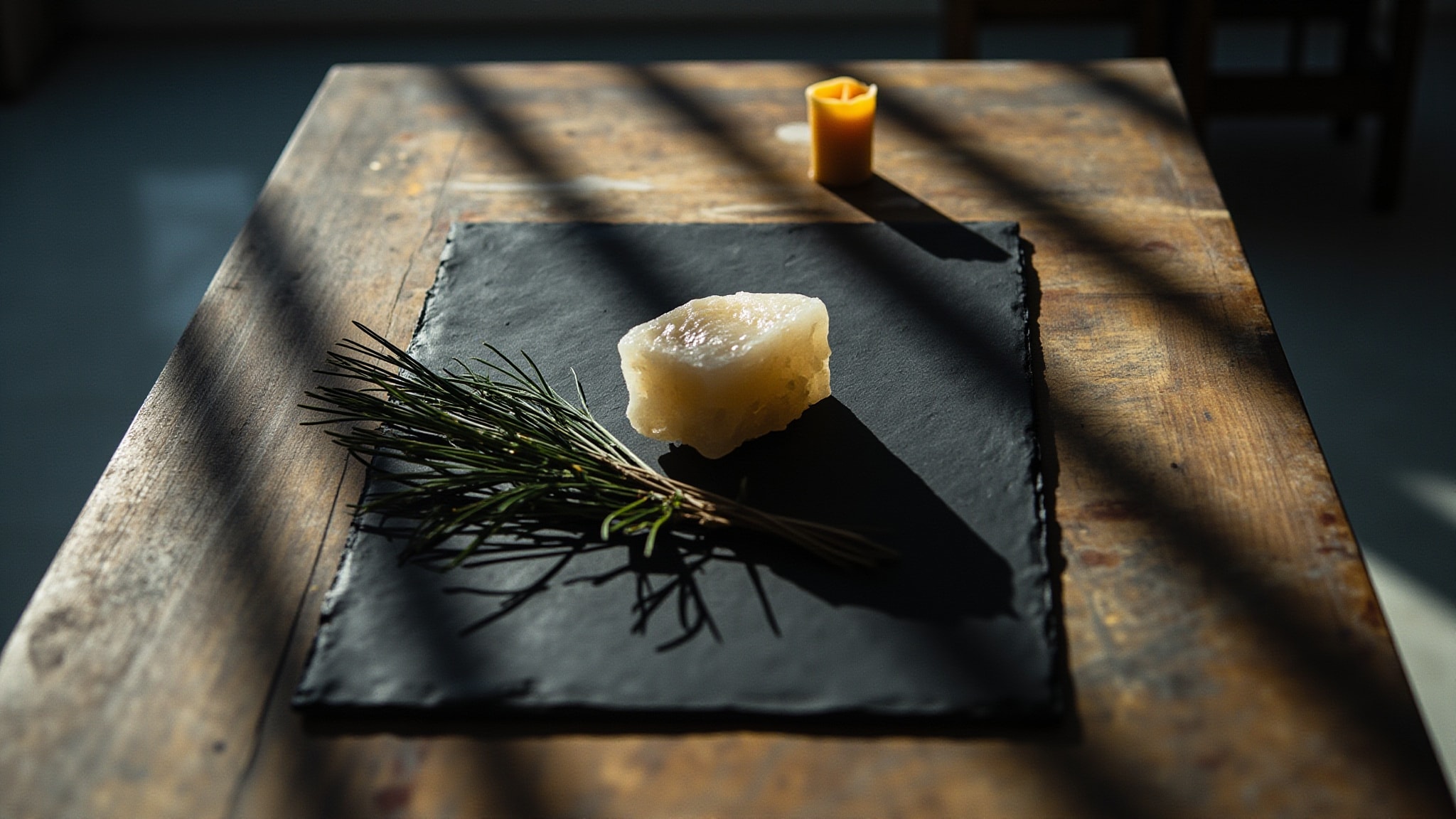
Antiu doesn't ease you in. The opening is galbanum and lemongrass doing something sharp and herbal, almost vegetative, like crushing pine needles between your fingers on a cold morning. Bergamot and Bulgarian rose try to soften the edges but they barely register against that green ferocity. Then the resins arrive in a wave, frankincense and myrrh pooling together with balsam fir and beeswax into something that smells closer to a cathedral than a forest. The pine tree and pine needles ground it further, giving the whole composition a vertical, woody spine that holds up under all that balsamic weight. As the composition develops, the green has fully surrendered. What's left is warm and dense: Australian sandalwood, cedarwood, cinnamon, calamus, and a faint bitter-almond sweetness that wasn't visible at the start.
Cultural impact
Antiu draws directly from Metopion, a perfume formula Pliny the Elder and Dioscorides mentioned for its beautiful scent in their writing. Dawn Spencer Hurwitz's 2013 adaptation translates the ancient original into a modern wearable composition while honoring its resin-driven architecture: galbanum, myrrh, frankincense, balsam fir, and beeswax echo the heavy materials that once defined the original formula's reputation. The New Kingdom setting matters here, because Hurwitz framed the entire collection as a series of translations rather than reconstructions, and Antiu sits at the heart of that project.