The Story
Why it exists.
The beginning
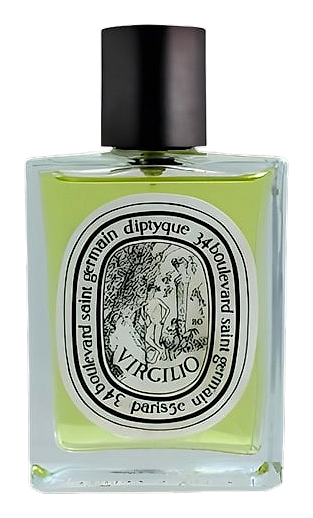
Virgilio, named for the Roman poet whose Georgics mapped the landscapes of rural Italy, arrived in 1990. That was thirty-five years after Diptyque's founding, during an era when the house was quietly retreating from its most experimental period. Perfumer Serge Kalouguine built this composition around a singular proposition: what if the top note was the whole story? Basil, alone. Not a supporting character. Not a garnish. The lead.
Caraway adds a quiet, fennel-like spice that softens the basil's herbal sharpness. The woody notes in the heart aren't one material but an accord, a neutral, textured middle ground that lets the green fade without competing. Then cedarwood and vetiver arrive in the base, grounding everything in earth, warmth, and the faintest hint of smoke. It's a fragrance that moves from bright to grounded, from aromatic to woody, without ever losing its composure.
The evolution
The opening doesn't tease, basil announces itself immediately, green and camphoraceous, with a sweetness that suggests the essential oil rather than the kitchen herb. Within the first hour, caraway emerges, tempering the sharpness into something warmer. The woody heart takes over around the second hour, a textured middle that reads more forest than florist. By hour three, cedarwood and vetiver have settled into the skin, creating an earthy drydown that lingers for another three to four hours. Moderate sillage throughout. This isn't a fragrance that fills a room, it wants to be discovered.
Cultural impact
Virgilio was discontinued years ago, slipping quietly out of Diptyque's catalog during a period when the house was streamlining its range. For collectors, that's precisely the draw, a 1990 composition from an era when Diptyque still favored restraint over complexity. It reads now like a time capsule of naturalistic perfumery, before the niche boom made every fragrance a statement piece.