The Story
Why it exists.
The beginning
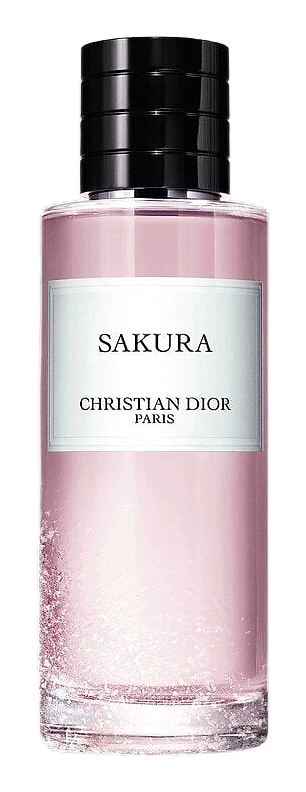
Sakura arrived in 2018 as François Demachy's answer to a question many fragrance houses had asked but few had answered well: what does Japanese cherry blossom actually smell like? Not the theoretical idea of it, the real thing. Demachy, Dior's longtime perfumer, had access to everything the house could offer in terms of raw materials and precision. For Sakura, he chose restraint. The name itself, Japanese for cherry blossom, carried cultural weight he couldn't ignore. Dior had long looked to Asia for inspiration, from the houndstooth codes of the couture house to the golden amphorae of J'adore. Sakura became another thread in that pattern: a fragrance named in Japanese, built on French expertise, designed to feel like a moment rather than a memory.
What makes Sakura work isn't any single ingredient, it's the balance. Japanese Cherry Blossom is the conceptual anchor, but Demachy built the structure around it with rose, jasmine, and hedione, a molecule known for conveying fresh, transparent floralcy. The green notes at the top give it that just-cut stem quality, while mimosa and violet in the base add a powdery softness that keeps everything from reading too sweet. White musk is the quiet binder throughout. The result is a fragrance that smells like an impression of spring rather than a catalog of notes, one where the whole reads as a single idea rather than a list of components.
The evolution
Sakura opens crisp and alive, green notes hitting first like stems snapped at the garden's edge. Within minutes, the florals arrive, not a rush but a settling, like petals finding their place on a branch. The cherry blossom doesn't announce itself; it becomes the air. As the top notes fade, rose and jasmine take over quietly, hedione adding that transparent quality that makes florals feel like they have light inside them. The base arrives soft and powdery, mimosa and violet lending a softness that keeps the whole thing close to the skin rather than filling the room. White musk holds everything together, neither loud nor fleeting, it becomes the quiet you notice only when it's gone.
Cultural impact
Sakura arrived during a period when Japanese-inspired luxury was becoming increasingly significant in Western fashion and fragrance. It found its audience among those who wanted something quieter and more specific than traditional florals, people drawn to the idea that a fragrance could capture a cultural moment rather than a generic concept. The reception has been consistent: not a fragrance that sparks debate, but one that earns quiet loyalty. It's the kind of scent people wear when they want to smell like themselves.