
The Story
Why it exists.
The beginning
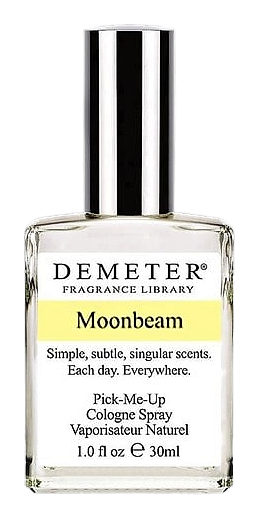
Moonbeam draws its inspiration from a line of poetry, 'the moonbeams kiss the sea' from Percy Bysshe Shelley's 'Love's Philosophy', imagining what it would smell like if light itself were wearable. Not literal moonlight, but the feeling of it: something luminous and quiet, with a warmth that comes from being seen. The fragrance was released in 2012, borrowing from the 19th century and made wearable for anyone curious enough to try it. There's a softness to the concept, an invitation to carry something delicate against the skin, to embody the gentle glow of a moonlit night without any of the mysticism just the sensation of pale light touching everything around it.
What makes Moonbeam work is its structural tension. The vanilla-chocolate opening is undeniably sweet, almost edible, but Demeter didn't stop there. Jasmine and lily of the valley add a floral brightness that pushes the composition somewhere more interesting than straightforward gourmand. Green leaves appear in the heart of the fragrance, contributing a vegetal quality that keeps the sweetness grounded. It's not a dessert scent. It's a dessert scent that got interrupted by a garden.
The evolution
The first minutes belong to vanilla and chocolate, warm and almost edible, like opening a tin of hot cocoa in a cool kitchen. Within ten minutes, the green leaves arrive, they don't dominate, but they shift the temperature, cool against the warm. Then the florals step in: jasmine lifts, lily of the valley adds a quiet creaminess, and the composition settles into something softer than it started. The drydown holds vanilla and amber close to the skin for another hour or two, faint but present, the kind of trace someone might notice only if they're standing near you. The performance is intimate by design, not by accident, keeping the wearer in a private aromatic space rather than announcing their presence to a room.
Cultural impact
Moonbeam occupies an unusual position in the Demeter catalog, combining a foody opening with white florals and green notes in a way that reads as neither fully gourmand nor fully floral. The Shelley reference gives it a literary credibility rare in the brand's playful lineup. The composition stands apart from Demeter's typical single-note offerings, showing a willingness to layer disparate elements into something more complex. Among Demeter's discontinued scents, it remains notable for those who seek it out, a fragrance that rewards patience and rewards attention to how its different facets unfold over time.