
The Story
Why it exists.
The beginning
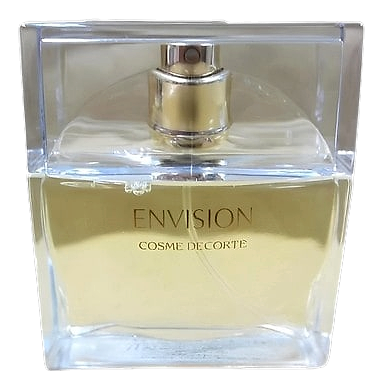
Envision No. 1 launched in 2003, when Decorté was still primarily known as a Japanese cosmetics label with a restrained approach to beauty. The fragrance belongs to that early period of the house's scent wardrobe, before its later kimono-centered collections. No named perfumer or documented inspiration is given in the available research, so its intention is best read through the composition itself: orange and pear create a clean, fruit-led opening, while floral notes, powder, amber, and musk shape a composed feminine finish. It is not a story built on spectacle. It is a fragrance designed around a graceful transition from brightness to softness.
What makes Envision No. 1 interesting is the way its structure keeps several contrasts in play. Orange gives the opening a clear citrus spark, and pear adds rounded fruit rather than pure sharpness. Floral notes then take over the middle, giving the composition a polished, feminine center. At the base, powdery notes soften everything while amber brings warmth and musk gives the drydown a close, skin-like finish. The result is familiar in its language, but more interesting than a simple fresh fruit floral. It moves from fresh to delicate to quietly warm without needing to shout.
The evolution
The first impression is clear and buoyant: orange cuts through the air, while pear gives it a juicy, rounded edge. That brightness does not linger as a loud citrus burst. It softens into the floral heart, where the fragrance becomes more polished and graceful, less fruity and more intimate. Then powder, amber, and musk gather underneath. Amber adds a gentle warmth, musk keeps the result close to skin, and the powdery notes leave a soft, blurred finish. Across the 4-6 hour wear, the scent settles from a fresh-fruited opening into a composed floral musk. The citrus eventually fades first; pear softens, florals blur into the background, and the warm base stays as the final impression.
Cultural impact
Envision No. 1 belongs to Decorté's earlier fragrance period, before the later kimono collections became the house's clearest cultural register. Its Japanese brand context favors a restrained, polished idea of femininity, with beauty carried through balance rather than excess. The composition fits that sensibility as a neat meeting of citrus, fruit, floral softness, powder, and musk, though the available research does not document a specific reception or influence.