
The Story
Why it exists.
The beginning
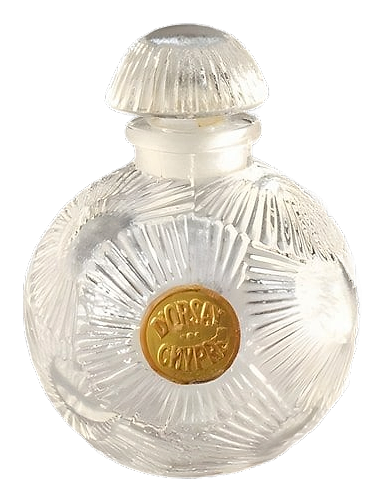
Chypre d'Orsay arrived in 1912, and the name says everything it needs to say. A chypre, by d'Orsay. No poetry, no character study, no invented persona to dress the composition in marketing clothes. Just the family name, the genre, and the confidence to let both speak for the work underneath. That kind of naming was its own kind of editorial decision, a bet that the structure could carry the weight without a story bolted onto the side. The classical chypre sits on architecture: a bright citrus opening that catches the light, a floral heart that folds into the middle, and an oakmoss-labdanum base that grounds the whole composition in something mossy, warm, and unmistakably grounded in the French tradition. The accord doesn't apologize for itself.
The chypre accord is one of perfumery's foundational structures, built on the contrast between fresh citrus, a floral heart, and an oakmoss-labdanum base. What makes a 1912 chypre like this one worth revisiting is the way the older formula holds its materials, letting the natural density of the components do the work without leaning on modern fixatives or restraint-driven reformulation. The accord mosses with intention, sits green in the middle phase, and settles into a base that doesn't fade so much as fold itself quietly into the skin.
The evolution
The first ten minutes are the bright ones. Citrus cuts through with that clean, almost austere sharpness that defines the classical chypre opening. It's the smell of old cologne in the best possible sense: not dated, just made by hands that didn't believe in apologizing. The top notes don't linger long, but they leave their fingerprint on everything that follows. The middle phase settles into a mossy floral, where the green notes start to fold into the composition like a letter being sealed. The greens deepen, get more humid, almost forest-floor. The resinous elements join underneath, bringing their warm, amber quality, and the whole thing starts to feel less like a fragrance and more like the atmosphere of a room with good lighting and better company. As hours pass, the drydown arrives and stays.
Cultural impact
Chypre d'Orsay belongs to a category that essentially defined what French perfumery smelled like for the better part of a century. Released in 1912, it sits inside the classical chypre tradition, a lineage of compositions built on structure, contrast, and the architecture of moss, citrus, and resin working in conversation. It shares a shelf with other classical chypres that prioritize that architecture over spectacle, the kind of composition that doesn't age because it was never trying to be current in the first place.