
The Story
Why it exists.
The beginning
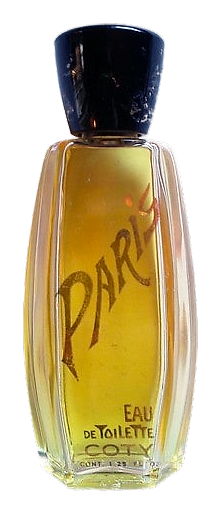
Paris by Coty arrived in 1923, François Coty's love letter to the city he called home. Not the Paris of postcards or tourist dreams, but the one that lived in the architecture, the street corners, the particular way light hit Haussmann facades at dusk. Coty understood that a city could be distilled. He built the fragrance around aldehydes, those shimmering synthetic molecules that were changing perfumery in the early twentieth century, letting florals breathe longer and brighter than nature alone ever could. Bulgarian rose and lilac anchored the composition, two florals that captured different hours of a Parisian day, the rose for the morning, the lilac for the garden at evening. The result was a fragrance that smelled like Paris smelled to someone who had lived there long enough to stop noticing it, then started again.
Aldehydes are the structural secret here. Those waxy, slightly soapy molecules don't just add brightness, they act as a fixative, slowing down the evaporation of lighter florals and letting each note linger longer than it would alone. In Paris, that means the lilac and hyacinth hold on through the heart phase rather than vanishing in minutes. Bulgarian rose takes its time, rose by rose. The civet is the fragrance's quiet confession, animalic, slightly feral, present in just enough quantity to give the powdery florals something real to press against. Vanilla in the drydown doesn't sweeten so much as warm, turning the powder into something skin-like, close, and lasting.
The evolution
The aldehydes hit first, bright, effervescent, like light through a window that's just been thrown open. Within minutes, the florals start their slow unfurling. Lilac and hyacinth push through the aldehydic shimmer, green and cool. The heart belongs to Bulgarian rose, but ylang-ylang and carnation push in from the sides, adding spice and warmth. Then civet. Not obvious, just a warmth that reads as skin, as presence, as something that wasn't there in the opening. The drydown is powder and vanilla and musk, all blended into something that smells like the memory of flowers rather than flowers themselves. It stays close to the skin for hours. You catch it when you move, when you lift your wrist, when someone leans in.
Cultural impact
Paris belongs to the lineage of aldehydic florals that defined early twentieth-century French perfumery, fragrances that used synthetic molecules not as shortcuts but as tools for new effects. Its aldehydic structure, powdery heart, and warm musky drydown place it alongside other classics of the genre, appreciated by those who understand what vintage perfumery was reaching for.