The Story
Why it exists.
The beginning
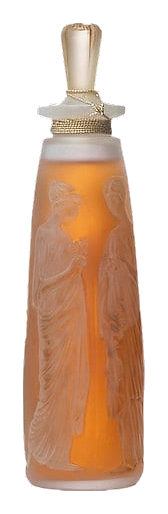
François Coty created Ambre Antique in 1905. He worked with Ambrein, a synthetic base that gave him new structural possibilities in fragrance composition, alongside floral notes and balsamic warmth. The result was both opulent and wearable, establishing amber as a compositional pillar that other houses would eventually build entire collections around. The amber itself feels deep and resinous, with a honeyed quality that isn't quite sweet, while the floral heart softens the overall impression without diluting it. Balsamic notes ground the composition, preventing it from floating away into abstraction and giving it a warmth that feels substantial rather than fleeting.
What makes Ambre Antique structurally interesting is the Ambrein. Before modern chemistry gave perfumers ambroxan and the various wood molecules, amber warmth was difficult to achieve at scale. The synthetic base gave Coty access to a warm, resinous heart that could be constructed with precision. Combined with the balsamic notes, think labdanum, benzoe, the slightly bitter-sweet resins, this was not a single-note amber. It was an amber argument. The floral heart kept it from becoming heavy, while the overall composition read as distinctly modern for its era, even as it invoked ancient warmth.
The evolution
The opening is resinous and warm, amber resin and something honeyed, not sweet exactly, but deep. Floral notes arrive to support the amber, not to compete with it. Then comes the drydown: powder arrives, but not the sharp powder of aldehydes. This is skin powder. Warm. The kind that settles into your skin and asks to be discovered rather than announced. Balsamic notes anchor everything, keeping the composition grounded as the florals fade. What remains is close, intimate, warm amber without sweetness. The longevity is above average, and the sillage is modest. The kind of presence that someone notices only when they're close enough to touch.
Cultural impact
Ambre Antique arrived in 1905 and created a new olfactory family of amber fragrances in modern perfumery. It established amber as a compositional category that other houses would spend the following decades exploring, interpreting, and building upon. The amber family it helped define now spans everything from mainstream orientals to niche creations. That legacy is hard to argue with.