
The Story
Why it exists.
The beginning
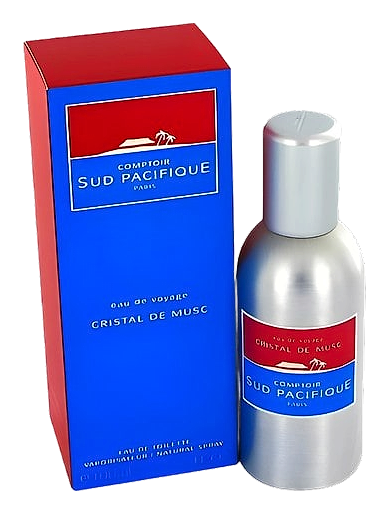
Cristal de Musc arrived in 1986, not with the tropical fanfare Comptoir Sud Pacifique had built its name on, but with something stranger. The house that gave the world vanilla and coconut chose instead to turn inward. Toward the body. White musk and hibiscus became the entire conversation: a fragrance designed to feel like skin, not perfume. The name itself, crystal musk, is almost a paradox. Crystal suggests sharpness, clarity, light. Musk suggests warmth, skin, the animal beneath. This was the tension at the heart of the formula from the start. Not a statement fragrance. A presence fragrance.
What makes Cristal de Musc unusual is its refusal to develop. Most fragrances have a trajectory, an opening, a heart, a drydown that changes everything. This one doesn't play that game. White musk and hibiscus arrive together and stay together. The hibiscus adds a soft, almost imperceptible floralcy, not sweet, not green, just there. The white musk wraps around it like skin on skin. Together they create something intimate and personal. The kind of fragrance you have to be close to notice. Which is, of course, the entire point.
The evolution
The scent opens in the first breath, no waiting, no preamble. White musk and hibiscus arrive simultaneously and stay locked together for the duration. There's no dramatic handoff between heart and base because, frankly, there is no base to hand off to. The composition exists in a single sustained note. Hibiscus provides the faintest floral brightness at the start, but within 30 minutes the white musk has absorbed everything. It becomes warmer, softer, more like the warmth of skin after a long day. Longevity sits around 3, 4 hours on most skin types. Drydown on dry skin approaches 5, 6 hours occasionally, though never with any real projection. The final stage is the most intimate: a whisper of clean skin that only someone pressed close would recognize as perfume at all.
Cultural impact
Discontinued and largely unexamined. But for those who know it, Cristal de Musc occupies a strange corner of the musk category, not a statement, not a skin scent exactly, but something in between. One reviewer called it "the perfume for people who hate perfume." Another noted it prefigured the "skin scent" trend by decades, arriving in 1986 with an approach that wouldn't become fashionable until much later. Its appeal is specific: proximity over projection. You have to be close to someone to notice it. Which, depending on how you look at it, is either a limitation or the entire point.