
The Story
Why it exists.
The beginning
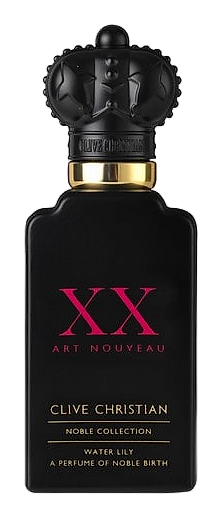
The Art Nouveau collection draws from the aesthetic movement that flowered at the turn of the 20th century, celebrating organic forms, natural beauty, and the kind of elegance that grows rather than stands. Water lilies, with their serene floats across still water, became the natural symbol for a fragrance that wanted to be luminous without being loud. The scent opens with aldehydes that feel like morning light filtering through water, crisp, bright, and quietly radiant. White florals emerge gently, their petals releasing a cool, watery sweetness that seems to hover just above the skin rather than wrap around it. There is a greenness here, delicate and fresh, like stems and leaves bruised slightly to release their scent.
The aldehydes do the work of light here. They lift the white florals away from the skin, creating the sensation of space and air around each note rather than letting them pool and overwhelm. Water lily is inherently ephemeral; on its own, it barely registers. Here, the aldehydes hold it open, make it readable. The heart is built on contrast: tuberose brings body and creaminess, but heliotrope and iris pull it toward something powdery, cool, almost mineral.
The evolution
The aldehydes arrive first, crisp and almost medicinal. They clear the air before the florals step in. Within minutes, water lily and tuberose emerge, but they do not compete with the aldehydes, they coexist. The aldehydes keep lifting, keeping everything airy and bright, while the white florals build their presence underneath. Heliotrope and iris arrive next, softening the composition into something powdery and cool. The tuberose never becomes tropical or heady; the aldehydes keep it honest. As the initial intensity settles, the florals begin their slow recession. Vetiver takes over, mineral and earthy, followed by patchouli adding a quiet depth. The cashmere musk is the last to arrive and the longest to stay, soft, intimate, close to the skin. Rather than projecting outward, it remains present in a subtle, close-to-the-body way that rewards those who lean in.
Cultural impact
The Art Nouveau movement emerged in the 1890s as a reaction against industrialization, championing organic curves inspired by natural forms like flowers, vines, and flowing water. Clive Christian's Art Nouveau collection directly channels this aesthetic philosophy, treating each fragrance as a wearable work of decorative art. The Water Lily variant incorporates the aldehydic tradition that revolutionized perfumery in the early 20th century, while drawing from botanical beauty principles.