The Story
Why it exists.
The beginning
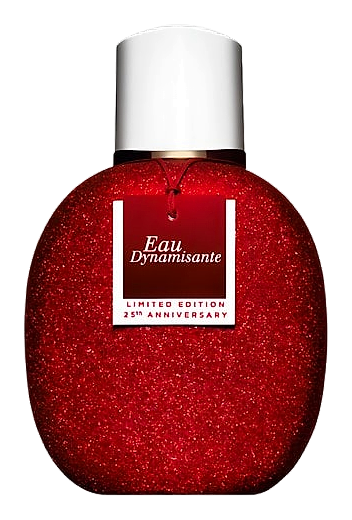
Twenty-five years after Clarins released its first fragrance, the house marked the milestone with something that felt like both a celebration and a quiet reclamation. The original Eau Dynamisante arrived in 1987 as a treatment fragrance, not just a scent, but something meant to be applied to skin that had earned its wellness routine. The 25th anniversary edition kept that spirit intact while dressing it in something more collectible: a bottle covered in tiny red sequins, the kind of excess that signals someone wanted this to be noticed on a shelf. Only 200 pieces were made. The composition remained anchored in the same 14 essential oils that defined the original, a botanical roster Clarins built over decades of plant science, not trend-chasing. The anniversary edition wasn't a reinvention. It was a reminder that energy, properly channeled, doesn't need to shout.
What separates this from a standard citrus cologne isn't the lemon or mandarin, it's the ginseng and aloe vera woven into the base. Most fragrances treat skin as a surface. Clarins built Eau Dynamisante to treat it as a receptor, something the brand's spa heritage made possible. Ginseng carries a slight earthy bitterness that keeps the citrus from tipping into cleaner-than-thou territory, while aloe adds a barely-there softness that makes the drydown feel like moisture, not just scent. White tea does something similar, it bridges the gap between the herbal opening and the patchouli foundation, giving the composition a continuity that prevents the usual top-heart-base disconnect.
The evolution
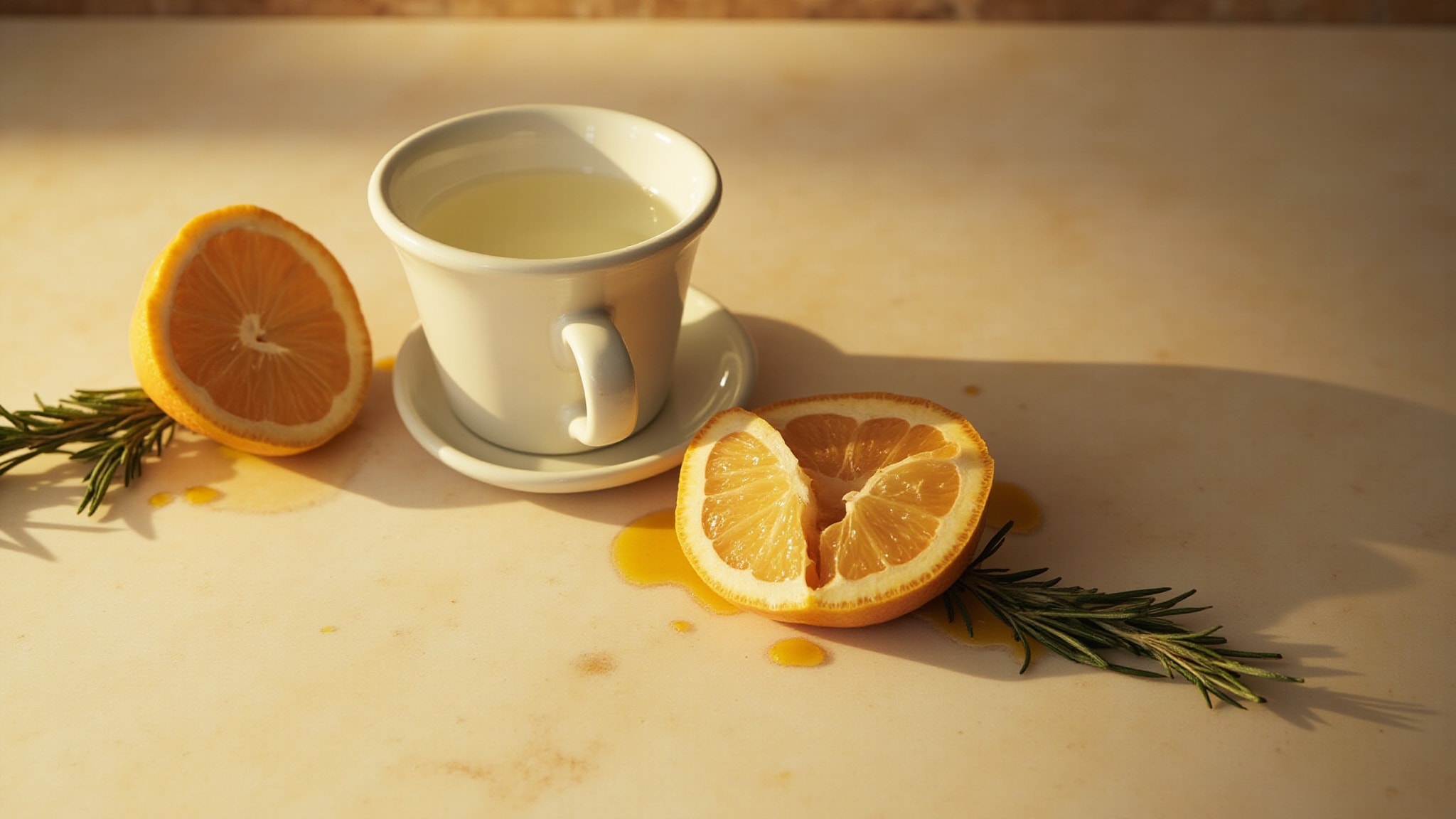
It opens sharp, lemon and mandarin punching through with petitgrain's green undertone, rosemary and thyme not far behind. The first five minutes feel almost medicinal in the best way, like walking into a apothecary that's also somehow a garden. By minute fifteen, the lavender and white tea arrive and soften the edges. The citrus doesn't disappear; it settles. The heart phase holds for roughly two hours, dominated by the herbal-spice tension, ginger and coriander playing against lavender's calm. Then patchouli takes over, and this is where the fragrance earns its treatment-fragrance label. The drydown isn't just a base note; it's a skin-feel, something that stays close and warm for another three to four hours on most skin. The next morning, there's still something there, faint, herbaceous, the ghost of a morning that started well.
Cultural impact
The 25th anniversary edition of Eau Dynamisante arrived in 2012 as a collector's object, 200 numbered bottles dressed in red sequins, but the fragrance itself carries none of the preciousness that label implies. Clarins designed the original in 1987 as a response to a specific problem: how to make a scent that energizes rather than decorates. The anniversary edition preserved that functional intent while acknowledging that someone, somewhere, wanted to mark the occasion properly. Limited runs like this one speak to a small but dedicated audience, the people who found the original's energizing quality worth celebrating a quarter century on.