
The Story
Why it exists.
The beginning
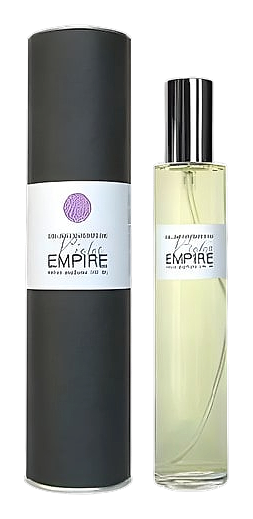
Violet Empire builds directly on CB Violet Empress as its foundation, then stretches outward with materials that carry weight: rosewood's warmth, mahogany's depth, leather's quiet authority. The composition opens green and strange, with violet leaf absolute taking a leading role rather than functioning as a fleeting top note. Rosewood and mahogany provide the structural support that allows the violet element to remain present as the fragrance evolves, rather than disappearing within minutes of application. The result is a fragrance with clear hierarchy and deliberate development, composed enough to hold attention without announcing itself at the opening.
What makes this composition notable is the way the violet leaf absolute behaves. In this formulation it functions differently than in many other fragrances, taking a leading role that extends throughout the wear rather than appearing only at the opening. Rosewood and mahogany don't try to dominate the violet. They provide the structural support that allows the violet element to remain present as the fragrance evolves, creating a drydown that retains its green thread throughout. Leather serves as the base, present and grounding without being aggressive.
The evolution
The opening is immediate and specific: crushed violet leaf, the kind of green you smell when you break a stem. It lasts longer than expected, that dewy vegetal note holding on before the woods begin to arrive. Rosewood comes first, soft and slightly sweet. The violet doesn't disappear entirely; it retreats to the background and stays there, a thread of green running through the drydown. Leather arrives last and provides the base that holds everything together. On fabric the drydown persists for hours. On skin the fragrance develops and resolves over time, with the leather element becoming more pronounced as the more volatile top notes fade.
Cultural impact
Violet Empire occupies a distinctive position in niche perfumery, neither aggressively avant-garde nor safely commercial. The work represents exactly this kind of approach: fragrances that smell like specific ideas rather than generic luxury. Wearers who connect with it tend to become collectors, returning to it as a reference point for what the middle ground between experimental and accessible can achieve. The fragrance holds up as an example of careful composition, showing how restraint and deliberate development can create something worth returning to.
The House
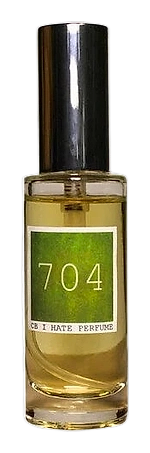
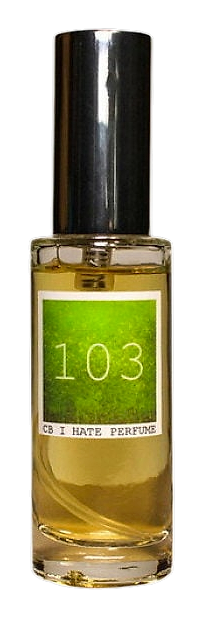
CB I Hate PerfumeCB I Hate Perfume is a Brooklyn‑based niche fragrance house founded by Christopher Brosius. The label treats scent as a personal narrative rather than a commodity, offering small‑batch creations that often blend unconventional ingredients. Each launch arrives with a handwritten note, inviting the wearer to experience the perfume as a moment in time rather than a mass‑produced product. The brand’s catalogue includes titles such as Cradle of Light (2006) and Wet Pavement London (2014), each reflecting Brosius’s idiosyncratic relationship with smell.
The Creator
Christopher BrosiusBrosius built his reputation on what he calls "fragrance library" scents: single-note or simple accords that capture specific odors with documentary precision. His approach is fundamentally different from the pyramid structure of traditional perfumery.