The Story
Why it exists.
The beginning
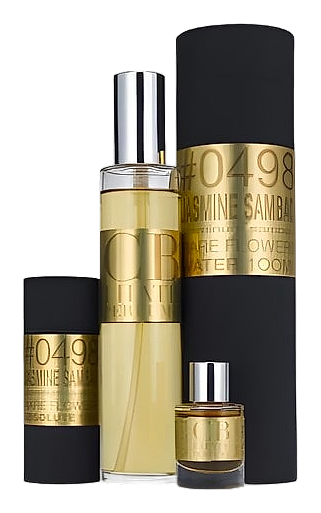
Christopher Brosius named it plainly because that's what it is. Released in 2013 as part of the Rare Flowers collection, Jasmine Sambac sits inside a catalog that prizes specificity over sprawl. The idea was never to dress jasmine in costume. No supporting cast of citrus or woods to make it easier. Just sambac, rendered as Brosius understands it: a living plant, not a floral abstraction. Each release in the line strips a single botanical down to its own terms. Here the subject is jasmine sambac itself, the variety perfumers consider the most opulent of the jasmines, the one most often used in garlands and temple offerings across its growing regions, valued for the dense, almost syrupy sweetness the flowers produce when distilled.
By limiting the formula to a single botanical source, Brosius exposes the parts of jasmine that conventional handling often smooths away. The flowers of sambac carry an intensity that reveals itself slowly over the hours of wear, an almost heady richness that pushes past what people expect from a white floral. The scent carries a density on skin that feels closer to a natural extract than to a constructed accord, the kind of presence you'd encounter walking past a flowering bush at dusk.
The evolution
Jasmine Sambac opens at full volume. There's no ramp, no easing in. From the first contact with skin, the sambac arrives in unmistakable terms, a dense and almost narcotic floral that fills the air around the wearer immediately. The intensity is present from the opening, not something that builds toward a peak but something that announces itself and then slowly reshapes. The heart of the fragrance arrives as the fragrance settles, and the character of the flower shifts. What replaces the initial impact is an even richer, denser floral that reads more animalic than the opening suggested. The indolic character deepens as the hours pass. This is where the fragrance earns its animalic accord category, the warm quality that more conventional jasmine compositions spend their entire run suppressing. Here it's part of the design.
Cultural impact
Jasmine Sambac sits inside a small but distinct lineage of soliflore compositions, fragrances built around one flower rather than a constructed accord. Within that world, this fragrance occupies an uncompromising corner. The Rare Flowers series treats jasmine sambac as the entire subject of the perfume, and the composition is willing to forgo the softening touches that more conventional florals rely upon. The result is a fragrance that functions less as decoration and more as a focused study, the kind of scent that asks to be worn on its own terms rather than layered with other elements.