The Story
Why it exists.
The beginning
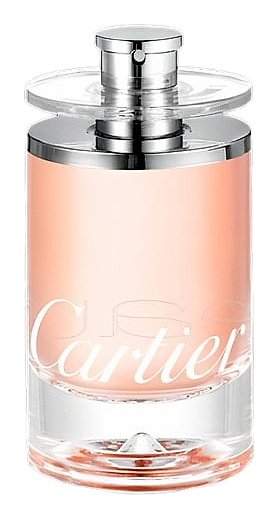
Mathilde Laurent created Essence de Paradis for a collection that had already mapped tropical territory, vetiver blues and crystalline refreshments. But this was different. The brief was paradise itself, not the idea of escape. She reached for ylang-ylang, the flower that grows in island gardens, heavy with honey and warmth. The Eau de Cartier line had always been about refinement in simplicity. Here, she wanted something that captured the actual sensation of languor under tropical light, not an interpretation, but a translation.
What makes this structure interesting is how the ylang-ylang functions as both the heart and the horizon. The fruity top notes arrive bright and almost effervescent, but they don't compete. They illuminate. Ylang-ylang doesn't need to be announced, it carries the composition on its own sweet-floral shoulders. The woody base and musk anchor it into something wearable, something that belongs to skin rather than air. It's paradise without the clichés of tropical fragrances: no coconut, no tiki-sharpness, no beach-bar energy. Just warmth, rendered in Cartier's particular restraint.
The evolution
The opening is fruity, bright, almost clean, like the first moment of sunlight through a window. Then the ylang-ylang takes over, but it doesn't crash. It rises. The sweet-floral, honey-balmy character unfolds gradually as the fruity top notes dissolve. Woody notes and amber arrive to settle everything into place, and the musk keeps it close, intimate, the kind of sillage that someone standing beside you might notice before you do. By the drydown, it's skin-warm and quiet. Those who have worn it consistently describe a fragrance that rewards patience, unfolding differently across skin types but always arriving at that same lingering warmth. The next morning, there's a trace on fabric, soft, amber-forward, still undeniably this fragrance.
Cultural impact
Eau de Cartier Essence de Paradis entered a fragrance landscape defined by bold, assertive compositions and carved a quiet space within Cartier's own identity. Rather than competing with the Maison's more commanding releases, this 2016 flanker chose intimacy over impact. Its arrival coincided with a cultural moment when fragrance wearers were beginning to value subtlety and personal presence over theatrical projection. The composition reflects a shift toward restraint that would become more pronounced in subsequent years. Within Cartier's catalog, Essence de Paradis occupies a unique position: neither the geometric precision of their sports fragrances nor the opulence of their haute parfumerie.