
The Story
Why it exists.
The beginning
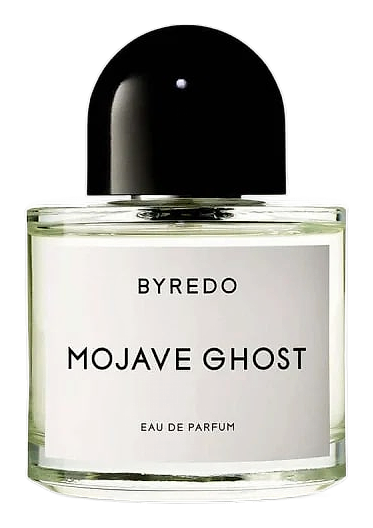
Mojave Ghost arrived in 2014 as Byredo's exploration of resilience, named for the ghost flower, an improbable bloom that pushes through the Mojave's unforgiving terrain. The concept isn't about loudness or survival. It's about flowering anyway. About delicate things persisting in harsh places. Byredo had built a language around contrast, memory and landscape, Scandinavian restraint and global wandering, but this was the house distilled to its quietest argument: presence isn't about volume.
What makes Mojave Ghost structurally interesting is what it chooses not to do. No sharp citrus top. No heavy oud base. Instead: ambrette, a plant-based musk that behaves nothing like its animalic predecessor. Sapodilla, a fruit note that's barely been explored in Western perfumery. The combination gives the opening an almost translucent sweetness, not loud, not bright, just present. The heart leans on magnolia and violet, two florals that in lesser hands become powdery and old-fashioned. Here, surrounded by cedar and musk, they read modern instead. Restrained. The kind of powder that smells like intention, not nostalgia.
The evolution
The opening doesn't blast, it arrives. Sapodilla's soft fruit quality sits close to skin for the first thirty minutes, almost an afterthought. Then magnolia rises, creamy and slow, and violet begins its slow powder drift. The handoff isn't dramatic. The sweetness doesn't vanish; it deepens, becomes something warmer as cedar and sandalwood push up from below. By hour two, the fragrance has settled into its truest self: intimate, woody, barely there. The drydown lasts, cedar warmth holding against skin, musk staying close, nothing projecting further than arm's length. On fabric the next morning: a ghost of cedar, barely searchable. It did its work overnight and left.
Cultural impact
Mojave Ghost sits apart in Byredo's catalog, delicate where others are bold, floral where others lean woody. It became a gateway for people discovering the house, proving that restraint isn't the same as weakness. The woody-violet combination earned a reputation for being quietly sophisticated rather than safe. Wearers describe it as the scent of someone who doesn't need to announce themselves, which, in fragrance culture, is its own kind of compliment.