The Story
Why it exists.
The beginning
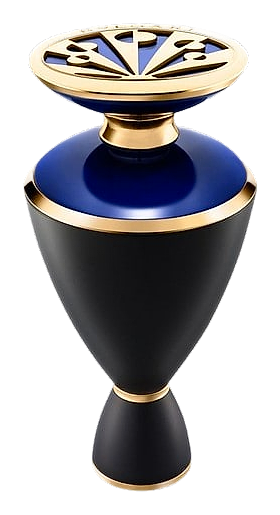
Lazulia belongs to Le Gemme, Bvlgari's collection of fragrances named for and inspired by precious gemstones. Each scent in the line translates a specific jewel into olfactory language. Lazulia draws from lapis lazuli, the deep blue stone prized since antiquity for its rich color and mysterious depth. Daniela Andrier was tasked with capturing that duality: the beauty of the stone's surface and the weight of what it represents. The result pairs two materials that rarely share space in women's fragrance, jasmine and oud, to create something that feels simultaneously delicate and dark.
What makes Lazulia structurally interesting is how it refuses the obvious path. Jasmine opens sweet, almost innocent. The instinct would be to follow with something light, a soft musky drydown, something safe. Instead, incense arrives mid-sequence, then oud anchors the base. The progression isn't floral-to-woodsy. It's floral-to-incense-to-resinous-wood. That incense bridge is unusual. It prevents the jasmine from floating away and stops the oud from landing too heavily. The three materials create a composition that holds its tension across the wear.
The evolution
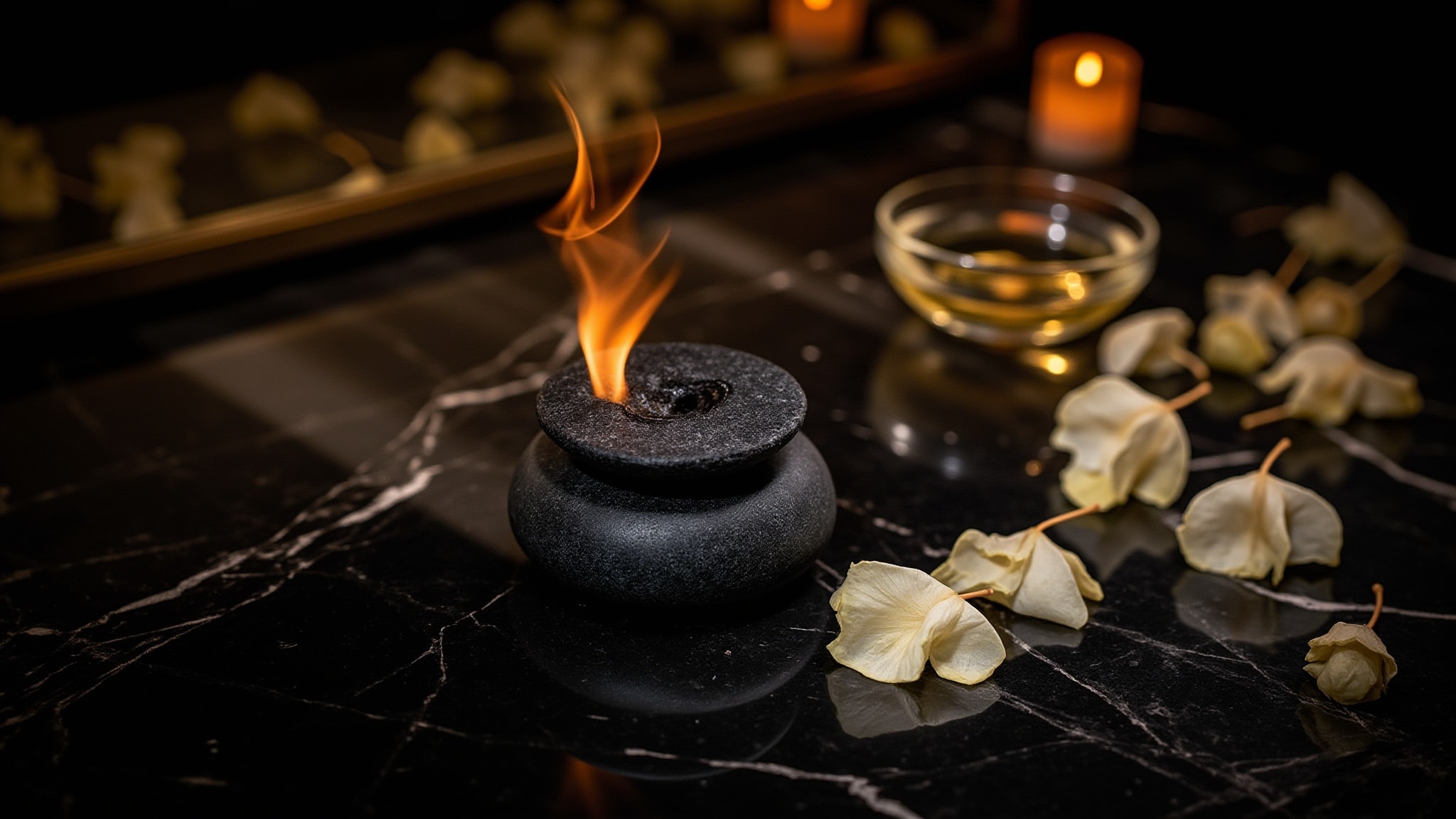
The jasmine opens creamy, natural, with a sweetness that doesn't feel manufactured. Within twenty minutes, incense moves in, hazy and warm, like the memory of a space rather than the space itself. The jasmine doesn't disappear. It softens, becomes a background sweetness that keeps the incense from feeling austere. The oud arrives quietly, settling close to the skin. This is not a fragrance that fills a room. It speaks at conversation distance, maybe closer. The drydown lasts for hours on most skin types, eight to ten, sometimes more on fabric. What lingers is a warm, resinous trace, slightly sweet, slightly smoky. The next morning, there's a ghost of it on clothes that weren't expecting to smell this good.
Cultural impact
Lazulia arrived in 2015 as part of Bvlgari's Le Gemme collection, a line positioning itself at the intersection of jewelry and fragrance. The oud-jasmine pairing was relatively uncommon for women's fragrances at that point, oud was still predominantly associated with masculine compositions. Wearers who connected with it tended to be those already drawn to resinous, smoky orientals. The fragrance never achieved the mass recognition of some Bvlgari flankers, but it developed a dedicated following among those who found it. Its classification as an Oriental Floral understates its actual character, the smoke and oud give it a weight that the floral label doesn't fully suggest.