The Story
Why it exists.
The beginning
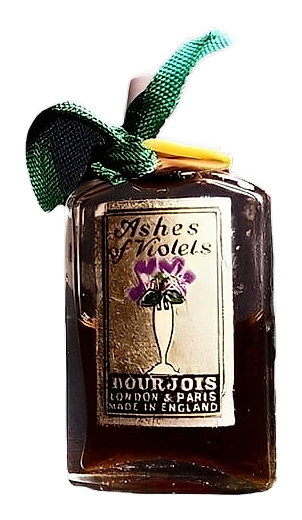
In 1913, Bourjois released Ashes of Violets, a composition built around a single obsession: the violet. Long before violet became shorthand for sweetness in modern perfumery, the flower carried something more complicated. The name itself, Ashes of Violets, evokes what remains after the bloom fades, that smoky, powdery residue that clings to the air hours after the petals have dropped. The violet accord dominates everything here, unfolding with a hush rather than a declaration. There is no bright citrus sparkle up top, no spicy warmth underneath to muddy the central theme.
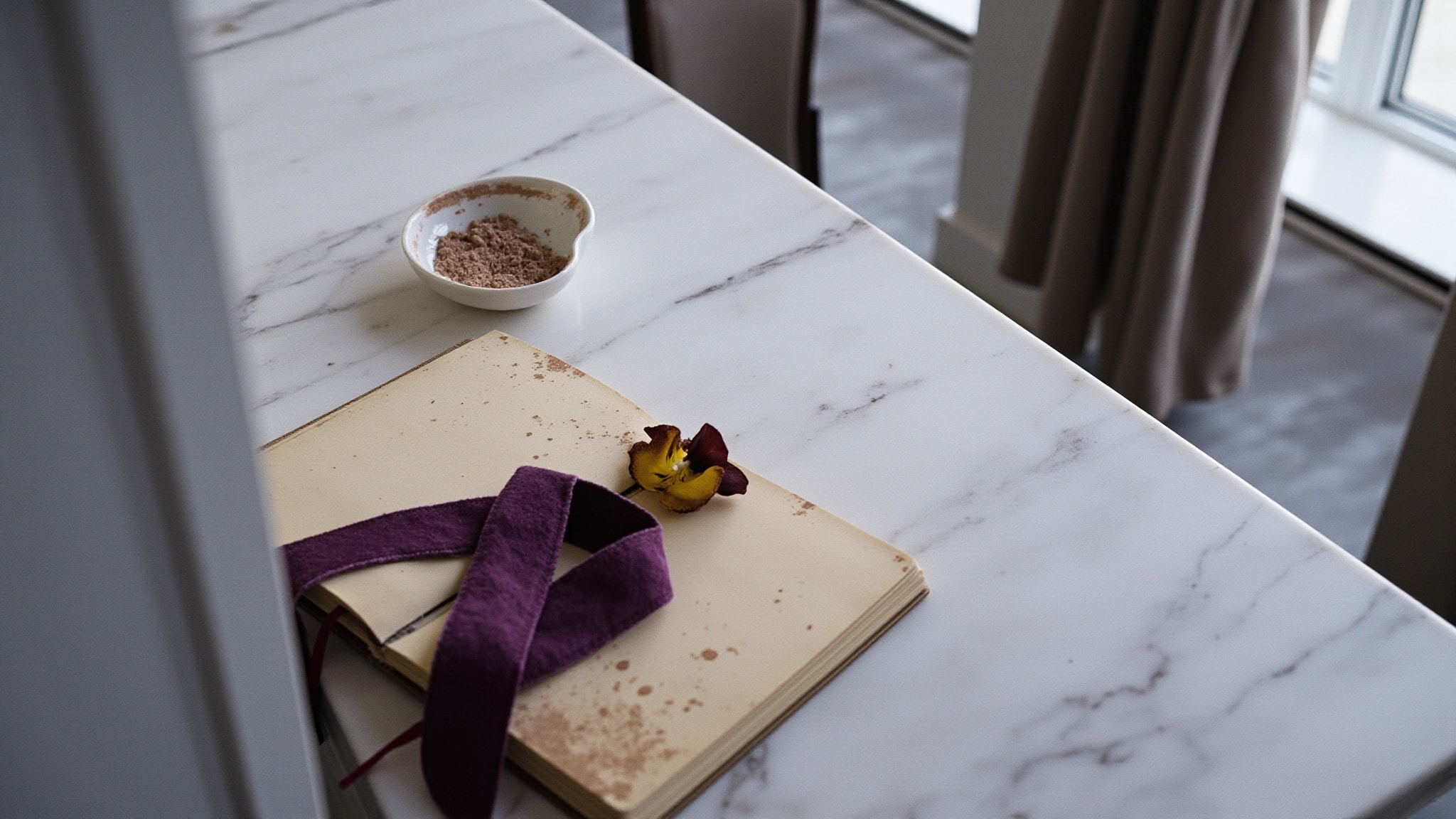
The violet accord anchors the composition with striking clarity. Rather than layering multiple florals to create complexity, Bourjois concentrated on one flower and let it speak in its own register, powdery and slightly cool, with that particular mineral edge violets carry when pressed between the pages of an old book. The result smells more like the idea of a violet than the flower itself, a memory of one rather than a fresh-cut stem.
The evolution
On skin, Ashes of Violets opens with a cool, almost metallic violet, the kind that reads more like the inside of an old wardrobe than a fresh bloom. There's a faint green sharpness at the edges, like stems left on a cutting board, but it passes quickly. The opening belongs entirely to the violet, clean and powdery, hovering close to the skin rather than projecting outward. As the composition moves into its middle phase, the powder softens into something warmer, less mineral and more suede-like, as if the violet has settled into a cushioned surface and absorbed the warmth of whatever surrounds it. The transition is subtle, almost reluctant, with the floral heart loosening its grip by degrees rather than stepping aside for a new act. What remains toward the late stages is barely a scent at all, more a trace, a softness against the wrist that you have to press your nose to find.
Cultural impact
Ashes of Violets occupies a distinctive place among early floral compositions, a fragrance that commits fully to a single note rather than building a bouquet. Its dedication to one flower offers a snapshot of a particular approach to perfumery, one where restraint and focus mattered more than abundance. The composition reads as a curiosity for anyone interested in how violet has been treated as a solo voice rather than one element in a larger chord. There's something quietly compelling about a fragrance that holds its single theme with such discipline, a small bottle that captures an idea rather than a market.