
The Story
Why it exists.
The beginning
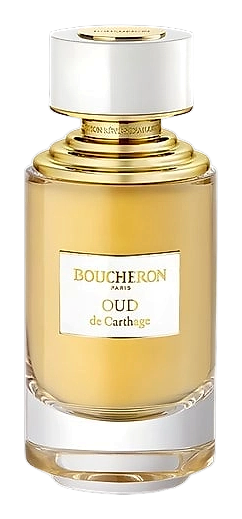
The Boucheron Collection draws from the memories of the maison's gem hunters, merchants who once traveled the ancient trade routes of Carthage, that legendary port where gold and ivory passed through hands that understood the weight of precious cargo. Oud de Carthage takes its name from that city, the ancient crossroads where aromatic resins and valuable materials changed hands along sun-warmed streets. Dominique Ropion built this fragrance around that spirit of ancient commerce and valuable cargo, working with honey and incense to evoke the memory of those market stalls, then anchoring everything in oud and leather for a drydown that feels like the cargo itself, dense, warm, and deeply resonant.
The note structure here is interesting because the honey doesn't behave like sweetness usually does in perfumery. It's darker, more resinous, closer to caramelized syrup than to the florals it sometimes accompanies. The incense bridges the opening and heart phases, giving the fragrance a through-line that keeps the composition cohesive rather than treating each layer as a separate event. Labdanum absolute, one of perfumery's most ancient materials, does the heavy lifting in the heart, its balsamic sweetness softening what could be harsh in the oud, while the tonka bean adds a warm, vanillic softness that makes the leather in the base feel less confrontational and more like worn-in luxury.
The evolution
The opening is warm and resinous, honeyed smoke that announces itself without asking permission. Incense sits at the front, that mineral edge of embers rather than churchy frankincense. Within the first hour, the tonka bean arrives, soft, sweet, and slightly powdery, pushing the honey into the background and replacing it with something creamier. The leather doesn't announce itself immediately. It builds quietly beneath the tonka, a base layer that adds weight without aggression. By hour three, the oud emerges fully, dark, slightly animalic, with that characteristic rawness that defines the note. The drydown is where this fragrance transforms. What started as warm and honeyed becomes something intimate and personal, the oud and leather settling into the skin like a second layer. On fabric, it lingers for hours.
Cultural impact
Oud de Carthage draws from one of the ancient world's most significant trading hubs, where merchants once moved precious resins, spices, and rare materials across the Mediterranean. Boucheron's gem hunter heritage connects to this lineage, positioning the fragrance house as a collector of rare treasures. The fragrance honors that cultural exchange without exoticizing it, instead framing it through a French jeweler's lens of craftsmanship and rarity.