The Story
Why it exists.
The beginning
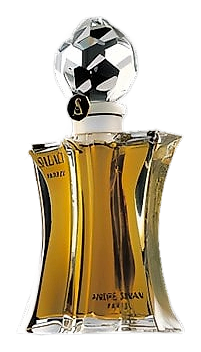
Salacia entered André Sinan’s catalogue in 1990 with a floral composition shaped by a clear contrast between bright petals and deep, earthy materials. Jasmine, rose, ylang-ylang, carnation and violet leaf form the floral structure, while patchouli and oakmoss lend the scent a darker foundation. The opening draws attention through the polished sweetness of jasmine and rose, enriched by the soft spice of carnation and the creamy floral warmth of ylang-ylang. Violet leaf adds a green, cool edge that keeps the arrangement from seeming entirely lush. Beneath those notes, patchouli gives the composition an earthy depth, and oakmoss reinforces its woody, mineral character.
The unusual part is the balance inside that floral frame. Jasmine, rose, ylang-ylang and carnation bring softness, light and a polished finish, while violet leaf adds a cool green edge. Patchouli and oakmoss pull everything downward into damp bark, forest floor and shaded stone. That contrast gives Salacia its chypre structure: a bright floral arrangement over a woody, earthy foundation. The result feels less like a single bouquet than a landscape, with flowers above and shadowed earth below.
The evolution
The opening reads cool and green, with violet leaf lending the faint edge of stems after rain. Jasmine and rose move across it in soft light, while ylang-ylang adds a creamy, sensual fullness and carnation brings a powdery floral note. As the flowers settle, patchouli changes the temperature. Its earthy weight seeps through the bouquet, and oakmoss deepens the shade from fresh stems to damp bark and old stone. What begins airy becomes warm and grounded, with the florals still present but no longer innocent. The drydown leaves a close, mossy trace, more mineral and earthy than sweet, as if the sea goddess has withdrawn and left her mineral trace on skin. Moderate sillage carries the scent without announcing it across the room.
Cultural impact
Salacia was released by André Sinan in 1990, and its identity rests on a distinctive floral composition rather than a widely documented cultural narrative. Jasmine, rose, ylang-ylang, carnation and violet leaf establish a luminous floral presence, balanced by the earthy depth of patchouli and oakmoss. The scent invites close attention because its notes shift in emphasis as it wears: the flowers provide an expressive opening, while violet leaf adds a green edge and the base notes gradually bring a darker, woody character.