The Story
Why it exists.
The beginning
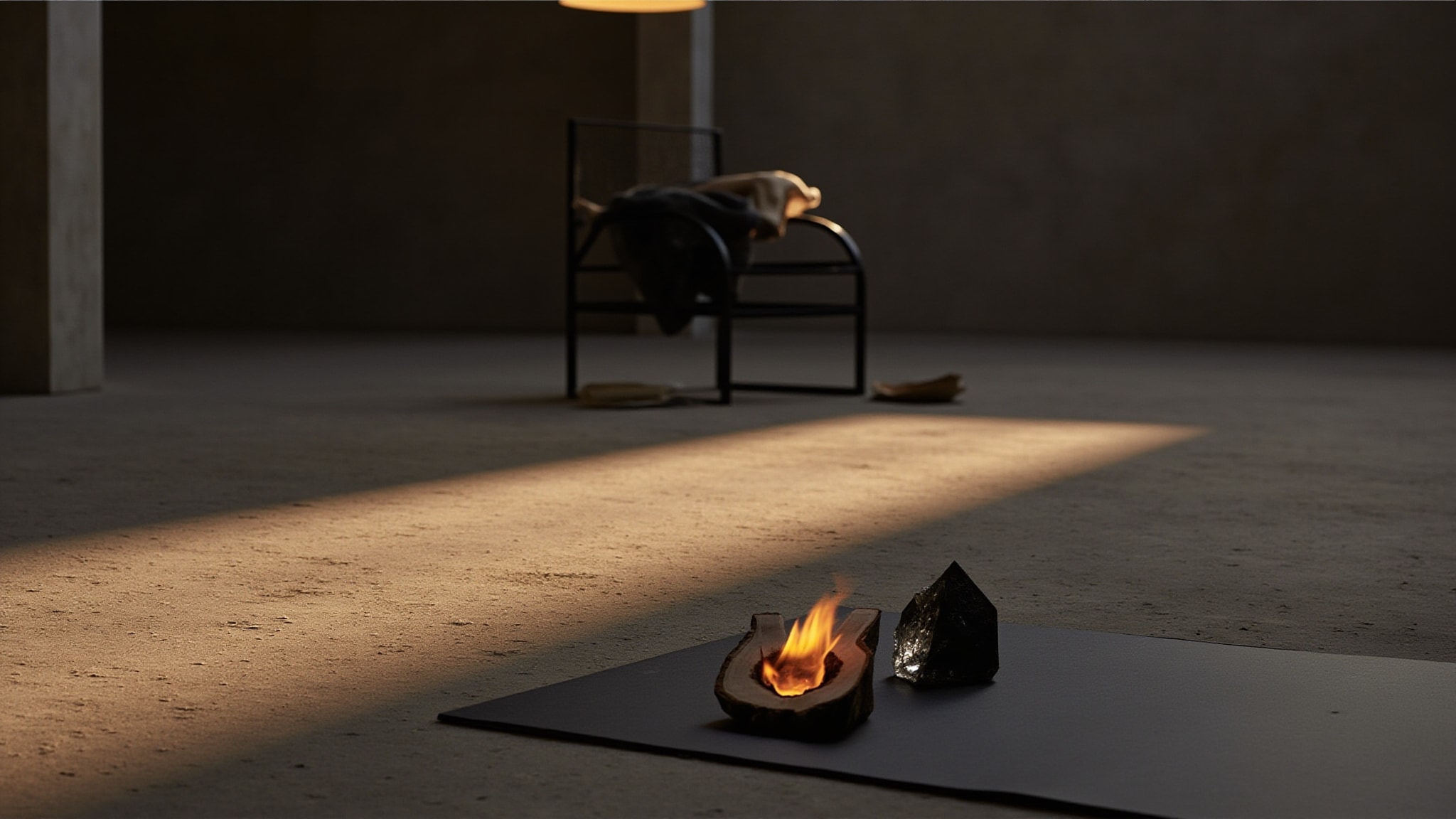
Samhain is named for the ancient Celtic festival marking the end of harvest season, the night when the boundary between worlds thins and the dead walk freely among the living. The occasion called for something stripped of sweetness, a composition that wears the holiday's name but doesn't dress up for it. Sharra composed this as a seasonal release, available only during the weeks that match its temperament. The conceit is austere: no sugar, no fruit, no softening gourmand warmth. Just wood, fire, and the kind of drink that warms from the inside. Samhain smells like the hour after the bonfire, not the ritual itself. The kind of scent that belongs to a specific temperature, a specific darkness, a specific kind of quiet that falls over a landscape when summer finally admits it's gone.
Its core accord is built on the tension between two materials that don't naturally belong together: the dry astringency of oakwood and the volatile burn of whiskey. Add cedar for structure and embers for atmosphere, and you get something that reads less like a perfume and more like a place. The oak comes through tannic and raw, almost bark-like in its dryness, while the whiskey brings a soft alcoholic warmth that never fully resolves into sweetness. It lingers in a register most fragrances avoid: wood without cream, warmth without sugar, smoke without ash.
The evolution
The first fifteen minutes are almost confrontational: sharp whiskey alcohol, a raw hit of smoke that reads more like charred wood than incense. There's no easing in. Then the oakwood begins to assert itself, and the composition shifts from volatile to grounded. The whiskey softens into something amber and boozy but never sweet, like the memory of a pour rather than the pour itself. By the two-hour mark, the cedar has taken over structural duty, and what remains of the embers settles into a low, steady warmth at the base. The smoke never fully disappears. It just stops being the loudest voice. What lasts on skin into the next morning is the oakwood, dry and tannic, with a faint ghost of whiskey sweetness underneath. The drydown moves through distinct chapters, each one handing off cleanly to the next without losing the thread of what came before.
Cultural impact
What sets Samhain apart is its refusal to engage with the shorthand of seasonal perfumery. Where many autumn releases lean on sweetness to carry their mood, this one commits to a drier, woodier register that reads closer to niche and small-batch territory than to anything designed for mass appeal. The composition pulls comparisons to tobacco-and-whiskey fragrances from larger houses, though it stays drier and more austere than most of those. It's a scent that rewards layering with cold air and wool, that opens up differently depending on the temperature outside. The whiskey gives it warmth without sweetness.