The Story
Why it exists.
The beginning
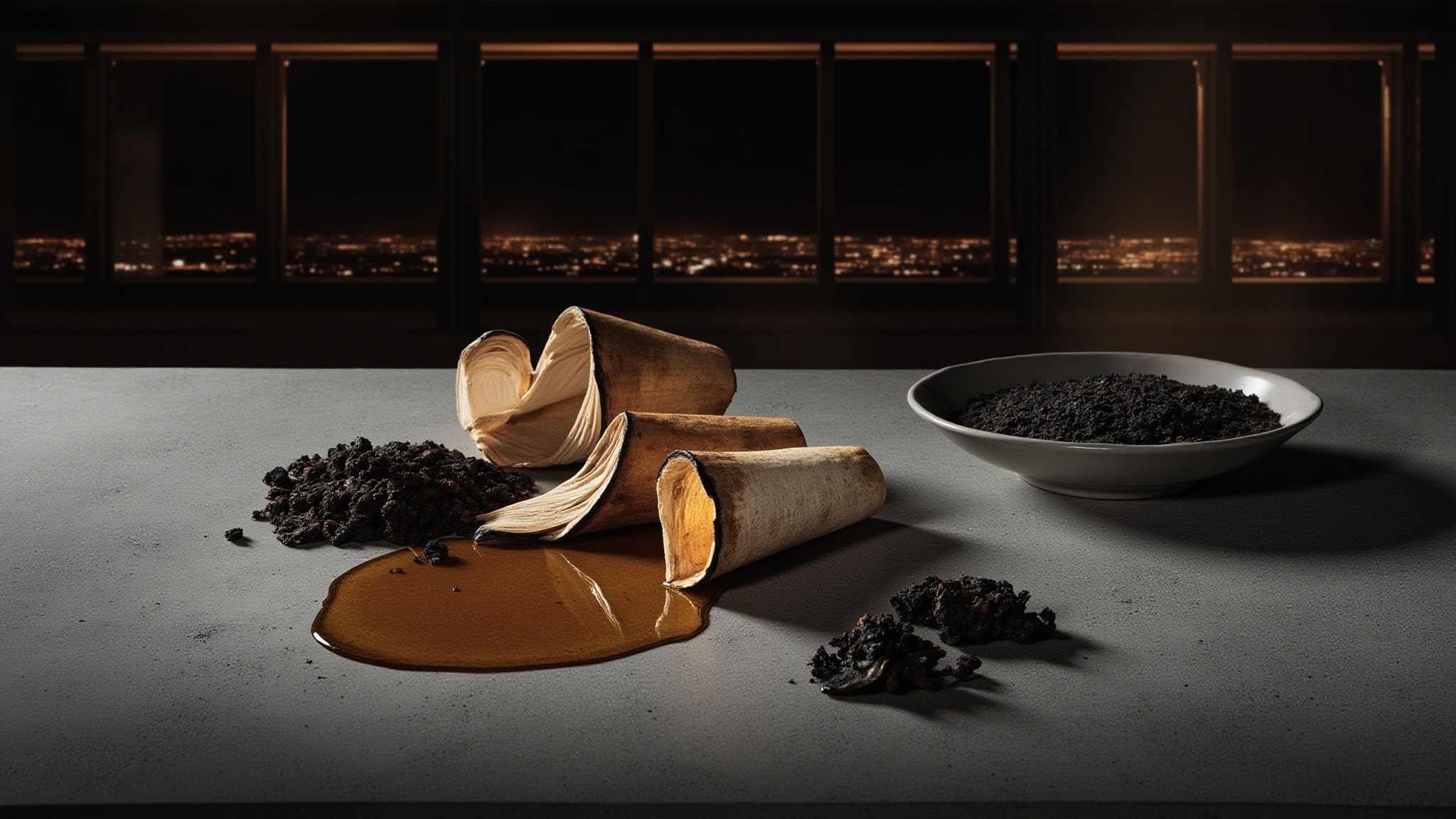
Thirteen lunar cycles, the time it takes the moon to cycle from full to full and back again. The number itself carries weight in the telling of this fragrance. Woodsmoke and amber resin held together by birch tar, chaga mushroom, green bayberries, tobacco, and enough maple sap to make it honest. The smoke rises first, but it is not a sharp or acrid smoke. It curls warm and round, like the memory of a fire seen from a distance. Amber resin follows, soft and golden, threading through the smoke without ever overpowering it. Birch tar brings a faint medicinal coolness, a whisper of forest depth that keeps the sweetness honest. Green bayberries add a tartness that surfaces briefly, brightening the composition before settling back into the whole.
Birch tar is the quiet radical here. It's not the sharp, medicinal birch of high-end niche houses. It's the slow, smoky, slightly sweet tar of birch bark burned low and patient. Combined with chaga, a mushroom that grows on birch trees and tastes like the forest floor after rain, you get something that smells like the forest itself, not a suggestion of it. The maple sap doesn't sweeten so much as amber the whole thing. And the thirteen lunar cycles? That's how Alkemia talks about time. Not days. Not weeks. Moons. This one took thirteen of them.
The evolution
The opening is amber and smoke in equal measure, the amber resinous and warm, the smoke cutting through with a tar-like edge from the birch. Within minutes, tobacco leaf arrives, dry, slightly sweet, and deeply textured. The mushroom accord builds quietly in the background, adding an earthy, almost forest-floor depth that keeps the sweetness honest. Cinnamon leaf flickers through, green and warm-spiced, never dominant. The drydown is where the maple sap asserts itself, a warm, caramelized sweetness that cuts through the smoke and keeps the whole thing from going too dark. Birch tar lingers longest, a faint smoky ember on the skin hours later.
Cultural impact
Ambre d'Automne sits in the seasonal tradition, available only in autumn, which makes it feel earned rather than marketed. The combination of woodsmoke, maple sap, and birch tar is unusual enough to attract attention but wearable enough to build a following. There is something about the way the smoke and sweetness interact that feels both familiar and unexpected. The birch tar adds an edge that prevents the fragrance from becoming merely cozy, while the maple sap keeps the woodsmoke grounded in something warm and recognizable.