
The Story
Why it exists.
The beginning
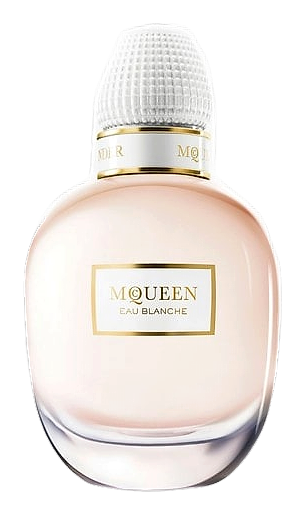
McQueen launched its first fragrance in 2003. By 2016, McQueen EDP had arrived, deep, smoky, dark in the house's Gothic romantic tradition. Eau Blanche, released in 2017, was conceived as its counterpart. Where the original leaned into shadow, Eau Blanche reached for light. The brief was essentially: keep the flowers, lose the darkness. The white florals at McQueen EDP's heart, jasmine sambac, tuberose, ylang-ylang, were already the luminous core. The challenge was pulling them forward, giving them room to breathe without the smoky base layers weighing them down. Violet leaf entered the opening to provide that crisp, dewy lift. White musk and woody notes anchored the base without obscuring what was happening above.
The most interesting decision in Eau Blanche is the absence of weight. Tuberose and jasmine are powerhouse florals, indolic, creamy, capable of overwhelming quickly. Pairing them with violet leaf at the opening creates an immediate coolness that shapes how the florals register. They bloom into a clean, luminous space rather than a warm, heavy one. Ylang-ylang is the quiet riser here. It adds a tropical, slightly heady quality to the heart that could have tipped the composition into sweetness. Instead, the white musk and woody notes arrive early enough to prevent that, creating a balanced heart where none of the three flowers dominates.
The evolution
The opening arrives crisp and almost ozonic. Violet leaf gives that mineral-water freshness, a cool green note that feels like morning air on wet stone. Within minutes, the white florals arrive, not sequentially, but together. That's unusual. Jasmine, tuberose, ylang-ylang typically take turns blooming. Here they layer almost instantly, a united accord rather than a procession. The heart holds steady for hours. The florals never fully separate, which is the composition's quiet sophistication. White musk keeps everything close to the skin, preventing the tuberose from going dense. The drydown is restraint itself: clean cotton, a trace of mineral, white musk that reads as skin-warm rather than perfume-warm. Performance holds reliably across most skin types, maintaining its character throughout the day. By the final hour, the violet leaf's cool mineral character lingers alongside a whisper of clean woody warmth. The next morning, close to skin, barely there.
Cultural impact
Eau Blanche arrived in 2017 as a deliberate counterpoint to McQueen EDP, released the year prior. The 2017 fragrance landscape was populated with white florals, many of them sweet, heavy, and projecting loudly. Eau Blanche positioned itself differently: luminous rather than radiant, restrained rather than bold. Enthusiasts have responded positively to its wearability, finding it a quiet departure from the house's more assertive releases while maintaining the signature white floral DNA that McQueen fans expect.