The Story
Why it exists.
The beginning
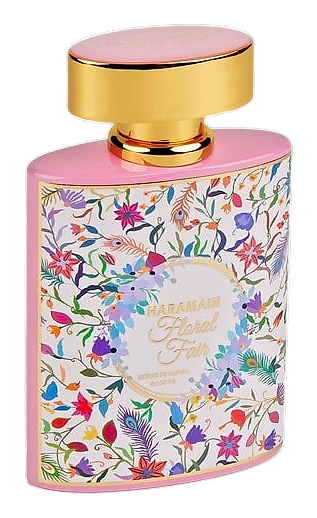
Floral Fair arrived in 2024 as Al Haramain's entry into the accessible floral category, a fragrance designed to capture the feeling of a bouquet rather than any single flower. The house, rooted in Mecca since 1970, has built its identity on oriental intensity, but Floral Fair takes a different route: lighter, more transparent, oriented toward the everyday rather than the ceremonial. The name itself is a statement of intent, a fair, not a carnival. Something composed and welcoming.
What makes the note structure interesting is the way it moves from crisp citrus opening into a heart that is simultaneously fresh and faintly synthetic. The white flowers, jasmine, tuberose, white blossoms, carry a subtle animalic undertone that the musk amplifies as the fragrance develops. Oak and patchouli in the base add a woody warmth that prevents the florals from becoming too precious. It's a composition that knows its audience: someone who wants femininity without fragility.
The evolution
The opening is all citrus brightness, bergamot and ginger lifting the rose so it reads clean rather than heavy. Within twenty minutes, the white florals take over: jasmine arrives first, then the tuberose adds a creamy, almost waxy depth. The heart phase is where the fragrance earns its animalic and powdery accords, close to the skin, slightly sweet, with a synthetic fruit note that some wearers pick up as a soft candy edge. By the third hour, the base arrives: musk and oak and patchouli, warm and woody, lingering close. On fabric, the drydown can last into the evening. On skin, expect 4-6 hours with moderate sillage, present without announcing itself.
Cultural impact
Rose-based fragrances have deep roots in Middle Eastern perfumery, where the damask rose from Damascus became a symbol of beauty and luxury across centuries. Al Haramain's interpretation draws from this tradition while incorporating the bright citrus notes of bergamot and the warming spice of ginger that reflect globalized taste preferences. This blend represents how contemporary Arabian perfumery balances heritage ingredients with modern sensibilities, creating scents that appeal to international audiences while maintaining cultural authenticity. The popularity of such florals in the Gulf region connects to broader traditions of hospitality and gift-giving where fine fragrances hold special significance.