
The Story
Why it exists.
The beginning
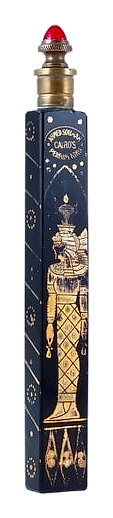
Cairo, 1925. Ahmed Soliman, often called Cairo's Perfume King, was at work in his workshop that decade. Alongside compositions like Cleopatra, Queen Hatasu, Queen of Egypt, Ramses IV, Tutankhamon, and Pharaoh Scent, he built a catalog that reached for monumental names. Narcissus joined that company. A soliflore built on a single flower, presented in concentrated form. Not a blend chasing complexity through layering. A composition that puts one botanical at the center and holds it there. The composition's name belongs to no monarch or ruler, only to the plant itself, and that choice is telling. On the material itself.
Narcissus as a perfumery material carries a dense, almost vegetable-green character that borders on bitter, with a honeyed undertone that only appears in the drydown. Working with it as a solo note requires the flower to carry the composition from the opening to the close, and it does so with a kind of weight. The green sharpness sits at the top, almost immediate on application, a dense leafy impression that reads cooler than the honeyed warmth waiting underneath. Over the first hour, the honeyed undertone emerges, sweetening the green without ever pushing it into something candied or soft.
The evolution
The first ten minutes are the narcissus leaf more than the flower. Green, almost like cut stems in a glass of water, with a faintly bitter edge that reads sharp rather than sweet. There's a damp quality, like wet stone or morning soil. Around the twenty-minute mark, the flower proper arrives, and the green deepens into something more waxy, with a honeyed warmth that wasn't there before. An hour in, the composition has settled into a close, skin-bound presence. The honey turns drier, almost hay-like, and the green recedes without disappearing entirely. Four hours in, you're wearing something that smells faintly of tea leaves and warm wool. Six hours and it's gone, but the scent of clean, sun-warmed fabric remains, the ghost of a flower that was never sweet to begin with. This is a fragrance that rewards stillness. It doesn't announce in a crowded room. It rewards someone standing close enough to notice, or the wearer catching their own wrist mid-afternoon.
Cultural impact
Narcissus sits at the quieter end of Ahmed Soliman's catalog, away from compositions named Cleopatra, Queen Hatasu, Queen of Egypt, Ramses IV, Tutankhamon, and Pharaoh Scent. A soliflore for the wearer who already knows what they want from a fragrance and isn't asking to be convinced. The format, concentrated oil rather than alcohol spray, gives it a slow release that keeps the scent close to the skin for hours.