
The Story
Why it exists.
The beginning
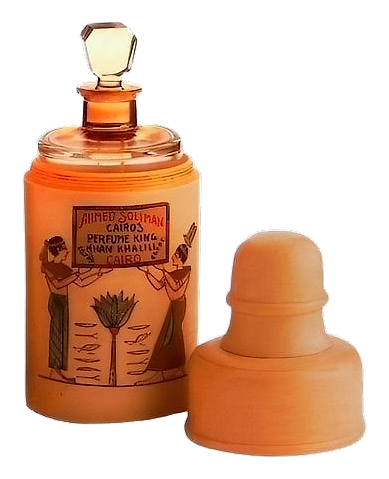
In 1925, Ahmed Soliman released Lotus Flower into Cairo, the city that had shaped him and the perfumed traditions he worked within. The composition is a soliflore, a term that means exactly what it sounds like, a single floral note held alone, unmixed, unintercut by competing companions. By the time Lotus Flower appeared, Soliman had established himself and had begun building a catalog. Lotus Flower entered that catalog as something almost austere by comparison. No resin scaffolding, no heavy amber base, no smoky frankincense to deepen the edges. Just the flower. The fragrance reads as a deliberate exercise in restraint, a perfumer stripping his composition down to a single botanical idea and trusting that idea to carry the entire weight of the wear.
What makes Lotus Flower distinctive is the clarity of its single-note construction. The fragrance carries a water-light floral character, transparent and clean, with an almost cool-handed restraint that sets it apart from heavier compositions. A lotus soliflore in any context is a deliberate provocation. The note itself carries associations that long predate modern perfumery, tied to sacred imagery in ancient Egyptian art, to vessels and adornments shaped with the flower in mind.
The evolution
On skin, Lotus Flower behaves like the flower it's named after, cool, slightly aqueous, and surprisingly persistent for something so transparent. The opening reads clean and watery. Not soapy, not sharp, just the sensation of something floral suspended in still liquid. There's no citrus spark to cut through first, no green stem note pushing the brightness up. The lotus note does all the work in the first twenty minutes, and it carries itself without assistance. Somewhere around the forty-minute mark the texture shifts. The aquatic quality doesn't vanish, but it softens, makes room for a creamier facet of the same flower. Think of the difference between a lotus seen from a dock and one held just above the waterline, same plant, different angle. The floral quality gains a faint sweetness, not sugary, more like the natural nectar of the bloom itself.
Cultural impact
Released in 1925, Lotus Flower sits at a narrow intersection of perfumery traditions. Coming from a house rooted in Cairo, the fragrance arrives with the weight of regional craft behind it, a context in which fragrance carries meaning beyond simple scent. A water-white lotus soliflore, by contrast, reads almost modest. It is the kind of composition that rewards attention rather than demanding it, offering a single botanical idea and asking the wearer to slow down enough to receive it. The fragrance's quiet register does not diminish its place in the catalog. If anything, it expands what the house is understood to offer.