The Story
Why it exists.
The beginning
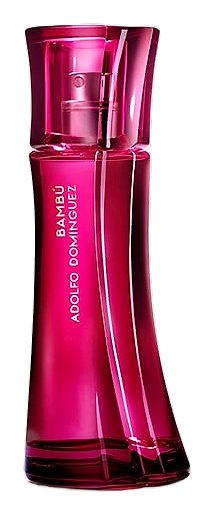
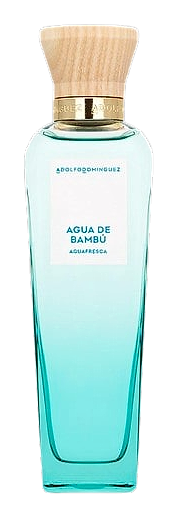
Ramon Monegal created Agua de Bambu in 2011 for Adolfo Dominguez, the Spanish fashion house built on a philosophy of restraint and natural elegance. The brief was simple: translate bamboo into scent. Not a literal interpretation, the cool, hollow sound of wind through stalks, but the feeling of it. Resilience that bends without breaking. Growth that stays close to the ground. The fragrance arrived as an aquatic-floral, anchored by yuzu and bamboo at the opening, softened by lotus, freesia, and jasmine at the heart, grounded by clean musk and cedar at the close. It was designed to feel found, not constructed. The kind of scent that belongs to the person wearing it, not the room they're in.
The note structure hinges on lotus appearing twice, in the opening alongside yuzu and bamboo, then again in the heart alongside freesia and jasmine. Most fragrances introduce a note once and move on. Here, the repetition creates continuity. The lotus doesn't disappear between phases; it deepens, as if the water lilies are slowly opening across the composition rather than arriving and departing. The yuzu at the opening is immediate and citrus-bright, cutting through with a clarity that reads more like morning light than perfume. Bamboo adds a green, slightly hollow quality, not aquatic in the synthetic marine sense, but fresh the way a forest is fresh after rain.
The evolution
The yuzu hits first, bright, tart, gone in minutes. Then the bamboo settles in alongside it, adding a green backbone that keeps the citrus from feeling too sharp. Twenty minutes in, the lotus and freesia arrive together. The freesia reads as a soft, slightly sweet floral; the lotus keeps everything watery and calm. This is the heart of the fragrance, and it lasts a few hours before the jasmine becomes more apparent, adding a creamier dimension to the florals. By hour three or four, the composition has settled into something close to the skin, clean musk with a whisper of cedar underneath. Not animalic, not loud. The kind of scent someone notices only when they're standing next to you. On fabric, the florals linger longer than on skin, fading slowly into a faint, skin-like warmth that stays until the next wash.
Cultural impact
Agua de Bambu arrived in 2011 as part of a broader moment in fragrance when light, aquatic florals were dominating the market. What set it apart was the bamboo concept, a less common botanical anchor that gave the composition a green, fresh quality distinct from the marine-heavy aquatics of the era. It found its audience in wearers who wanted something clean and feminine without the theatrical performance of a louder fragrance. The 2011 launch positioned it as an everyday scent, and it has remained exactly that, a fragrance for the morning, for the office, for the person who wants to smell fresh without announcing it.