The Story
Why it exists.
The beginning
Celine Ripert designed Accendis 0.1 in 2015. The sequential numbering system, 0.1, 0.2, Aclus, introduced a house built around systematic exploration. The fragrance departs from a conventional rose structure and instead constructs its identity around an unexpected tension: the cool, almost medicinal green of artemisia and galbanum meeting the warmth of May rose. The herbal and floral components push and pull against each other throughout the composition, the green notes refusing to fully recede even as the rose asserts itself. It is a fragrance defined by contrast rather than harmony, built on contradictions that remain unresolved.
What makes 0.1 unusual is the rose. May rose doesn't arrive softly, it pushes through the green, carrying its own herbal weight from the cypriol oil in the heart. This isn't a rose that smells like a florist's bouquet. It's a rose that remembers it grew in earth. The base of benzoin and sandalwood gives it staying power, but the real story is the first hour: an astringent opening that refuses to be polite, followed by a floral that doesn't perform sweetness. The disharmony some wearers mention isn't accidental, it's the point. This rose wasn't designed to be liked. It was designed to be felt.
The evolution
The opening announces itself with the green sting of artemisia and galbanum, sharp and almost medicinal. That herbal edge doesn't soften immediately, it holds for the first thirty to sixty minutes, an astringent prologue that demands attention. Then May rose arrives, not with apology but with presence. It doesn't bloom so much as assert itself, carrying a quiet earthiness from the cypriol that gives it weight and keeps it from feeling ephemeral. The handoff to the base takes time. Benzoin and sandalwood begin their warmth around the third hour, the benzoin acting like a slow exhale while the sandalwood gives it somewhere to settle, creamy, woody, unhurried. Lorenox anchors the composition in its final act, keeping the warmth resolved and present long after the top notes have faded. The longevity is solid, lasting well past the workday on most skin types.
Cultural impact
Accendis 0.1 arrived in 2015 as part of an Italian house's founding trio. The sequential numbering system, 0.1, 0.2, Aclus, gave the collection a distinctive structure uncommon among niche launches of that period. The fragrance opens with a sharp, confrontational green artemisia note, and its refusal of conventional rose sweetness sets it apart. The green-rose combination reads as austere, even challenging, an unusual position for a niche fragrance at that moment. Collectors drawn to compositions that prioritize structure over immediate appeal have found in this fragrance a reference point for green-rose austerity.
The House
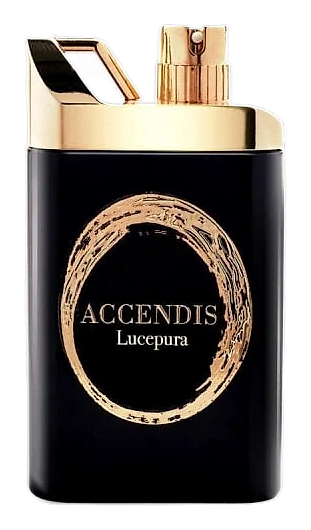
AccendisAccendis is an Italian niche fragrance house distinguished by its collection of artisanal perfumes, each presented under evocative Italian names that hint at luminous, sensory experiences. The brand has released multiple fragrance lines since its founding, with releases spanning from 2015 through 2024. Accendis operates within the niche fragrance segment, producing limited collections that emphasize olfactory artistry over mass-market appeal. The house name itself derives from the Italian verb "accendere," meaning "to light" or "to ignite," suggesting a creative philosophy centered on illumination, warmth, and the awakening of senses. Fragrances such as Lucevera (2017), Lucepura (2017), and Luna Dulcius (2018) suggest a recurring fascination with light as metaphor and motif. The brand maintains a deliberately selective presence, with its offerings numbered sequentially in certain collections, indicating a systematic approach to fragrance development rather than arbitrary release scheduling.
The Creator
Celine RipertRipert favors a structured yet fluid approach to composition, often building around a central accord that anchors the fragrance while allowing subtle variations to emerge as it develops on skin. She works comfortably with both natural and synthetic materials, choosing based on…