
The Story
Why it exists.
The beginning
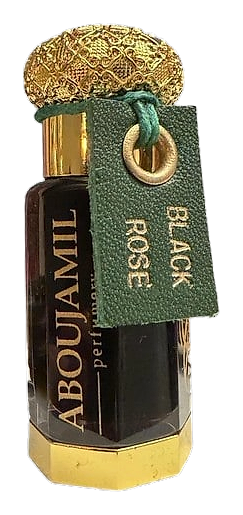
Black Rose entered the catalogue in 2026, and the composition does something specific with its materials. It takes the rose, that most translated flower in Arabian perfumery, and treats it through a darker lens. No simple floral tribute. No predictable sweetness. Instead, oud sets the foundation early, grounding the composition in something resinous and familiar to regional fragrance tradition, while Damask Rose and Bulgarian Rose deliver the bloom itself, layered for depth rather than a single-note reading. Tobacco adds a dry, smoky undercurrent, vanilla softens without making things gourmand, and deer musk brings an animalic warmth that keeps the whole thing close to skin. The name is a small provocation.
What makes this composition compelling is the tension between its materials. Oud and tobacco are dense, almost smoky, and they meet the roses in a way that pulls the fragrance toward the earthy and resinous rather than the purely pretty. Damask Rose and Bulgarian Rose share a family lineage but bring different qualities to the heart, one more lush and honeyed, the other more crystalline and slightly green, and their pairing creates a bloom that feels dimensional rather than flat. Then the base introduces vanilla, which in many compositions reads as straightforward sweetness.
The evolution
The opening carries the weight of oud from the start, resinous and slightly medicinal, with tobacco's dry smoke already threading through. It reads more like a contemplative incense than a bright floral for the first moments, dense and grounding rather than airy. Then the roses arrive, both Damask and Bulgarian, unfolding together in a way that feels generous and full. The Damask brings its characteristic depth, almost wine-like in its richness, while the Bulgarian lifts the pairing with a sharper, more luminous quality that keeps the bloom from collapsing into syrup. The vanilla begins to surface as the heart settles, warm and rounded, softening the oud's edges without diluting its presence. Deer musk sits underneath throughout, giving the composition a constant warmth that reads as skin rather than as a distinct ingredient.
Cultural impact
Black Rose occupies an interesting position in contemporary fragrance conversation. It uses rose, oud, tobacco, and deer musk, materials with deep roots in Arabian perfumery, but it wears with a specificity that sets it apart from the heavier regional launches that have dominated the oud category. The composition draws on lineage without defaulting to the dense, syrupy profile that oud-forward fragrances often fall into. Wearers who reach for it tend to appreciate that balance, the way the two rose varieties add lift and dimension to what could otherwise read as a heavy resinous base.