Siberian Juniper
From the frozen forests of Siberia, this juniper variety carries a sharper, more mineral edge than its European cousins. Steam-distilled from wild-harvested berries, Siberian Juniper brings an aromatic intensity shaped by extreme cold and vast evergreen wilderness.
Character
How it smells
Frozen forest in a bottle
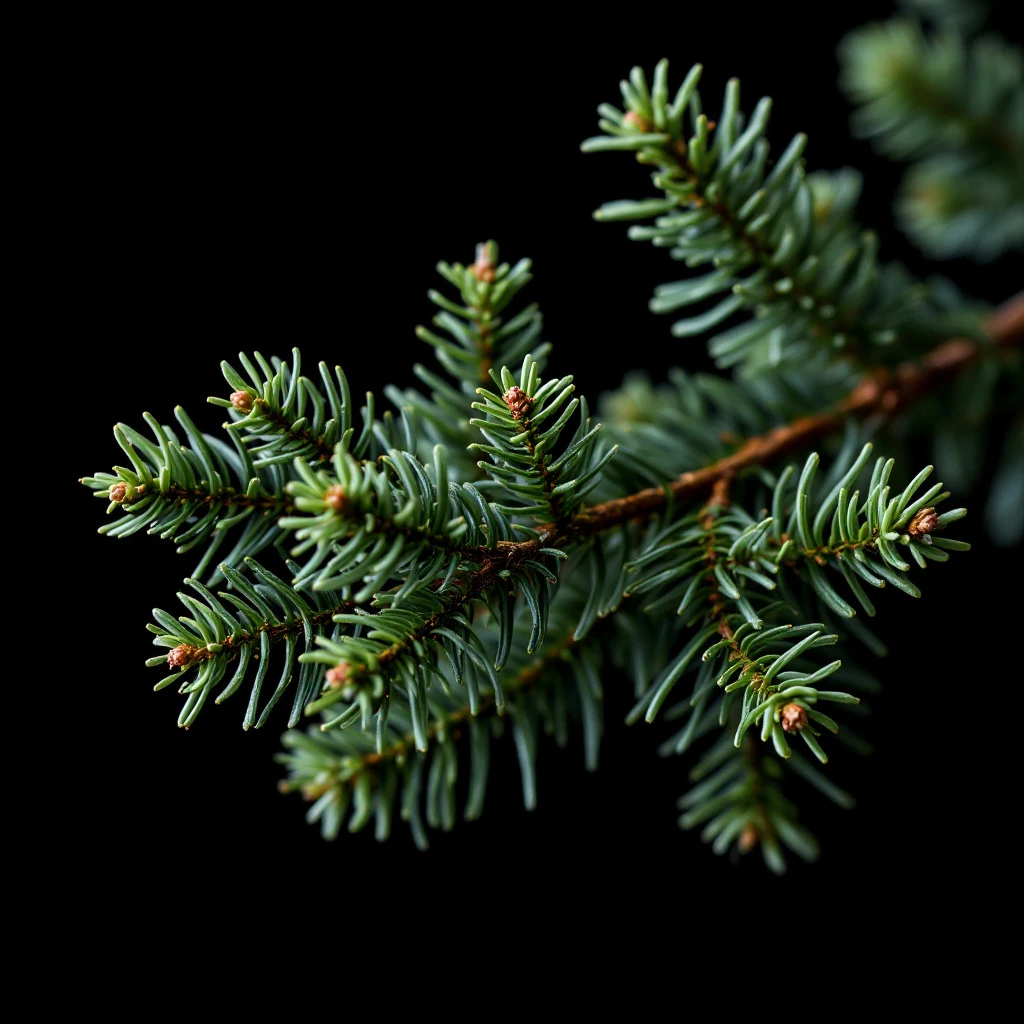
Siberian juniper trees can live for over 500 years, with bark that naturally resists fungal decay in harsh climates.
Pairs beautifully with



Origin
Russia
Juniper has been woven into Siberian shamanic traditions for centuries, where burning juniper branches was believed to purify sacred spaces and ward away negative spirits. Russian traders carried juniper berries along the Silk Road, trading them as both medicine and aromatic commodity. In traditional Siberian folk medicine, juniper preparations treated respiratory ailments and joint pain.
The specific use of Juniperus sibirica in perfumery emerged in the 19th century when Russian distillers recognized that cold-climate juniper produced notably different aromatic qualities than warmer-growing varieties. Modern perfumers value Siberian Juniper for its crisp, almost ozonic freshness that adds lift and definition to green, woody, and fougère compositions.
Wears it best
Fragrances featuring Siberian Juniper
Brands
Brands known for Siberian Juniper
Good to know
Questions, answered
The essentials on Siberian Juniper in perfumery: how it smells, where it comes from, and how it behaves on skin.
What aroma does Siberian Juniper bring to fragrances?
Siberian Juniper offers a crisp, sharply green scent with pronounced pine and peppery berry notes. It reads as fresher and more mineral compared to European juniper, adding lift and clarity to fragrance compositions.
Is Siberian Juniper natural or synthetically produced?
Siberian Juniper oil is 100% natural, steam-distilled from wild-harvested berries. Synthetic juniper aromatics exist but lack the complex botanical matrix of the natural extract.
What distinguishes Siberian Juniper from other juniper varieties?
The harsh Siberian growing conditions produce berries with higher concentrations of alpha-pinene and sabinene. This results in a sharper, more camphorated aroma compared to Mediterranean-grown juniper.
Which fragrance families commonly feature Siberian Juniper?
Siberian Juniper appears frequently in fougère, chypre, and green fragrance families. It also anchors many men's aromatic and woody compositions as a top-to-heart bridge note.
Is wild harvesting of Siberian Juniper sustainable?
Responsible wildcrafting limits harvest to established berry clusters, leaving enough fruit for natural regeneration. Certified sustainable sources support traditional harvesting communities and forest preservation.
Does Siberian Juniper have aromatherapy applications?
Traditional aromatherapy uses juniper for its supposed tonic and clarifying properties. However, the primary use in perfumery is as an aromatic ingredient, not for therapeutic purposes.
Can Siberian Juniper cause skin sensitivity?
Like most essential oils, Siberian Juniper oil may cause sensitization in some individuals. IFRA guidelines regulate its concentration in consumer products to minimize risk.
How does Siberian Juniper perform in perfume dry-down?
Siberian Juniper projects strongly in the opening but settles into a clean, dry pine resin character within the first 30 minutes. It rarely dominates a dry-down but provides lasting freshness and structure.