Passion Fruit Peel
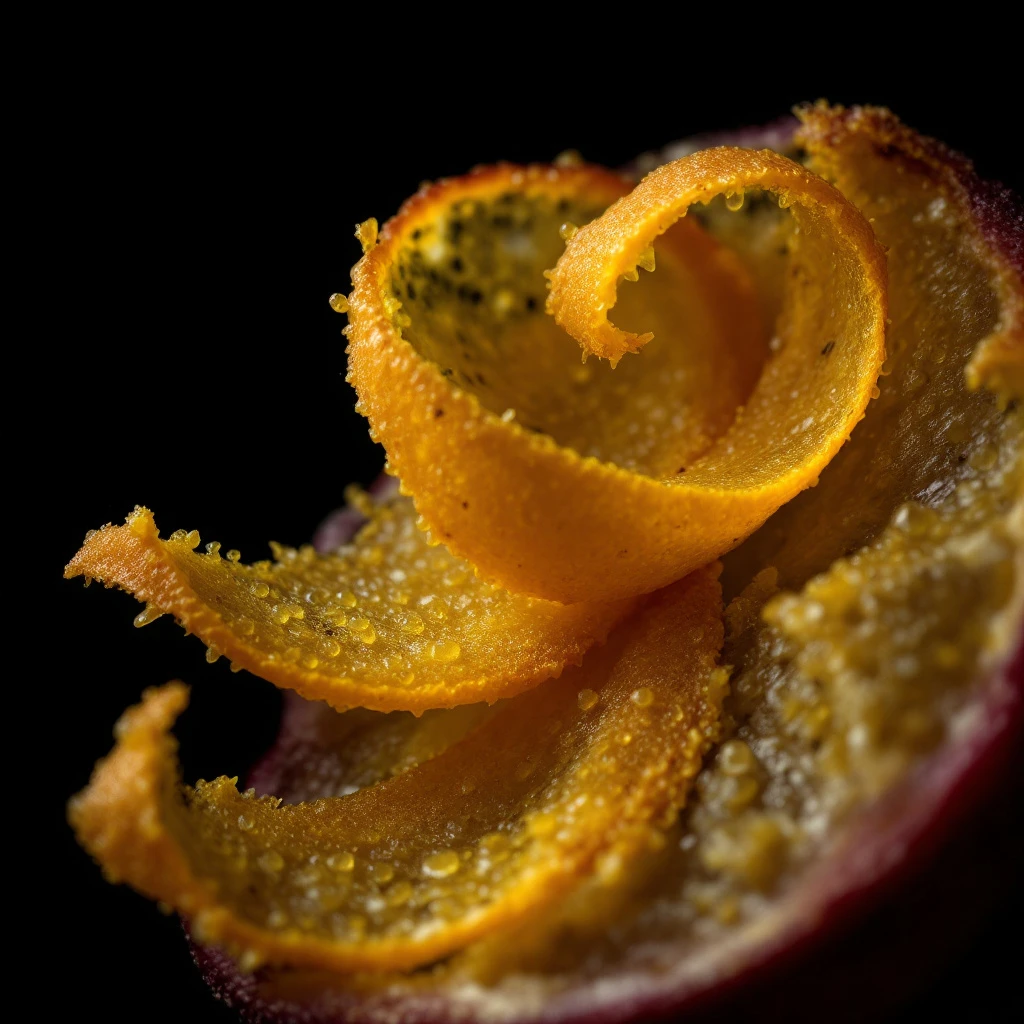
Passion Fruit Peel delivers a tart, tropical brightness that perfumers recreate entirely through synthetic chemistry. The actual fruit yields no stable essential oil, so every passion fruit note in fragrance is a lab-built illusion of sun-warmed skin and tangy sweetness.
Character
How it smells
Tropical brightness, built not pressed.
The passion fruit (Passiflora edulis) produces no extractable essential oil, so perfumers recreate its scent using headspace analysis, capturing the volatile molecules a real peel releases into the air.
Pairs beautifully with
Origin
Brazil
The passion fruit vine is native to a wide arc of South America, from southern Brazil through Paraguay and into northern Argentina, where Passiflora edulis and its yellow-skinned variant Passiflora edulis f. flavicarpa have grown wild for centuries. Indigenous communities in these regions consumed the fruit long before European contact.
Spanish missionaries in the 1600s adopted the plant and gave it its evocative name, associating the flower's elaborate corona with the Passion of Christ. By the 19th century, the fruit had spread to Hawaii, Australia, and parts of Africa, becoming a commercial crop. Its entry into perfumery, however, is a much more recent chapter.
Before modern aroma chemistry, there was simply no way to bottle the scent of passion fruit. When fruity accords surged in popularity in late 20th-century fragrance, perfumers turned to synthetic molecules to fill the gap. Today, passion fruit peel has become a signature note in tropical, gourmand, and youthful fragrance compositions, a reminder that some of the most vivid scents in a bottle are constructed rather than cultivated.
Wears it best
Fragrances featuring Passion Fruit Peel
Brands
Brands known for Passion Fruit Peel
Good to know
Questions, answered
The essentials on Passion Fruit Peel in perfumery: how it smells, where it comes from, and how it behaves on skin.
What does passion fruit peel smell like in perfume?
Passion fruit peel in fragrance smells tart, tropical, and intensely juicy, with sharp green notes balanced by sweet, almost mango-like ripeness. Because no natural extract exists, every version is a synthetic reconstruction of these characteristics.
Is passion fruit peel a natural or synthetic fragrance ingredient?
It is exclusively synthetic. The fruit's aromatic compounds are too fragile and water-soluble to survive distillation or solvent extraction, so chemists build the note from individual aroma molecules.
Why can't perfumers extract essential oil from passion fruit?
The volatile compounds that give passion fruit its scent degrade almost immediately after the peel is cut. Heat-based methods destroy them, and the molecules are largely water-soluble, making traditional extraction methods ineffective.
Where does passion fruit originally come from?
Passion fruit (Passiflora edulis) is native to South America, particularly southern Brazil, Paraguay, and northern Argentina. Spanish missionaries named it in the 1600s after the Passion of Christ.
How do perfumers recreate the passion fruit scent?
Perfumers use headspace analysis to identify the molecules released by a freshly cut fruit, then combine synthetic aroma chemicals like ethyl hexenoate and oxane derivatives to rebuild the scent with consistent intensity.
What types of fragrances use passion fruit peel?
Passion fruit peel appears most often in tropical, fruity, and gourmand compositions. It adds a bright, tangy lift to youthful fragrances and tropical-themed summer scents where juicy fruit character is desired.
Can passion fruit peel extract be found in any perfume?
No commercial perfume uses a true passion fruit peel extract. Passion fruit peel is occasionally processed for food flavoring, but these extracts lack the stability and concentration required for fine fragrance.
Is passion fruit peel sustainable as a perfumery ingredient?
The synthetic route is highly sustainable since it requires no agricultural harvesting. Some research explores passion fruit peel by-products for pectin and nutraceuticals, reducing food industry waste, though this does not extend to perfumery.